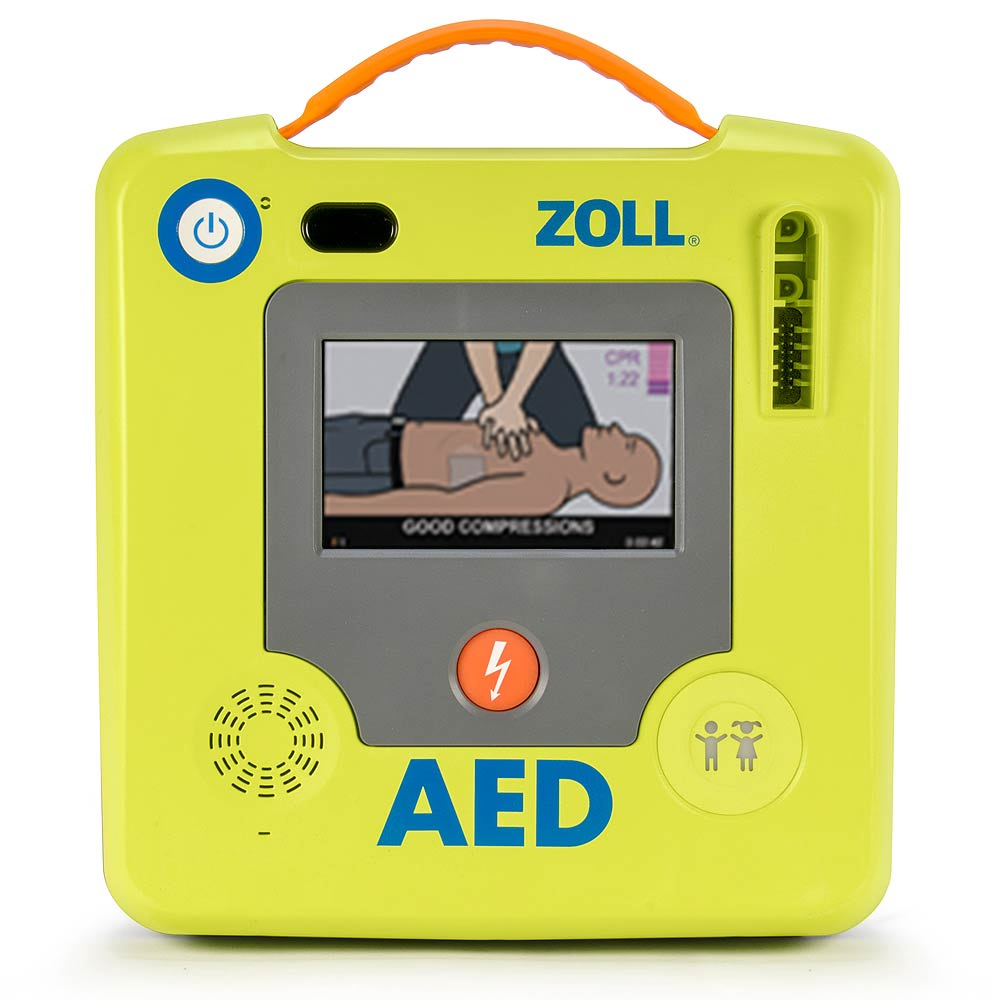
Using an automated external defibrillator (AED) can be the difference between life and death. Once the shock is delivered or the AED advises no shock, your work is not over. The next steps protect the patient, preserve critical information, keep your device ready, and strengthen your emergency response program.
Key Takeaways
- Prioritize patient care, secure a smooth handoff to Emergency Medical Services (EMS), and preserve the AED for event data.
- Document what happened, notify required parties, and understand protections under Good Samaritan laws.
- Download and share AED event data with EMS or the receiving hospital, then store it securely.
- Clean and disinfect the unit, dispose of biohazards safely, and restock pads, batteries, and supplies.
- Debrief with your team, support responders, and update training and protocols to improve readiness.
Immediate Steps After AED Use: Handoff and Preservation
Right after an AED is used, your first priority remains the patient. Continue high quality CPR if advised and follow AED prompts until EMS arrives or the person shows clear signs of life. When professionals take over, provide a concise summary of what you did and when you did it.
Stabilize and communicate
- If you have not already, call 911 or direct someone specific to do so. Confirm the exact location and any access instructions.
- Continue chest compressions as directed by the AED. Rotate compressors every two minutes to reduce fatigue.
- When EMS arrives, share the timeline: collapse time, when CPR started, when the AED was attached, shock decisions, and any observed changes.
- Offer details about the patient’s history if known, medications, allergies, or events that led to the emergency.
Preserve the device and scene
- Leave the pads connected to the patient until EMS instructs otherwise. EMS may swap electrodes but will value knowing which pads were used and when.
- Do not power cycle the AED. Event data is often saved on shutdown, but some models require a specific process. Keep the device on and accessible.
- Note who used the AED, the exact device model and serial number, and where the incident occurred. This supports later documentation and data retrieval.
According to the American Heart Association, every minute without defibrillation can reduce survival by 7 to 10 percent. Early CPR and AED use can double or triple survival compared with CPR alone.
Once EMS departs, shift focus to preserving the AED for data extraction and preparing for cleaning and restocking. Small actions now will save time and prevent lost information later.
Document the Incident and Understand Legal Considerations
Accurate, timely documentation strengthens patient care, protects responders, and supports your AED program. Create a simple incident log that can be filled out within hours of the event. Capture what happened, when it happened, and who was involved. These facts help EMS and hospitals, inform quality improvement, and satisfy regulatory or organizational requirements.
What to record right away
- Incident details: date, time, exact location, patient sex and estimated age, known medical history if available.
- Response actions: when CPR started, when the AED was turned on and attached, number of analyses and shocks, return of spontaneous circulation if observed.
- People involved: names and contact information of responders and witnesses, including the primary rescuer and AED program coordinator.
- Equipment identifiers: AED brand, model, and serial number, pad type used adult or pediatric, and cabinet location.
Legal and privacy basics
- Good Samaritan laws generally protect lay rescuers who act in good faith and within their training. Documenting your actions helps demonstrate this standard.
- If you operate an employer or public access AED program, follow your state’s AED statutes. Some require a physician medical director, AED registration with the local EMS authority, and post use notifications.
- Respect privacy. Avoid sharing identifiable information publicly. If your organization is subject to HIPAA or similar privacy rules, treat AED event data and logs as protected health information.
- Workplace events that result in death or certain injuries may require OSHA reporting or recordkeeping. Check your safety officer’s guidance.
Many states require that the AED program’s medical director and the local EMS authority be notified within 24 to 48 hours after any AED use. Check your written AED program for exact requirements.
File the incident report securely, restrict access to authorized personnel, and note any follow up tasks. Clear documentation sets the stage for proper data sharing, device maintenance, and debriefing.
Retrieve and Share AED Event Data the Right Way
AED event data can include the ECG rhythm strip, shock times, CPR intervals, and device prompts. Hospitals and EMS agencies use this information to confirm care decisions and to guide post resuscitation treatment. Capturing and transferring the data promptly helps the patient and supports quality improvement.
How to capture and transfer data
- Check your AED’s manual for the exact process. Some units save data to an internal memory or data card, others use a USB cable, Bluetooth, or a cloud portal.
- If your AED is Wi Fi or cellular enabled, event data may upload automatically after use. Confirm the upload and retrieve a copy for your records if permitted.
- If you need a cable, software, or guidance, contact the manufacturer or your AED program partner. MyAED can assist with data download accessories and instructions for popular models.
- Coordinate with EMS or the receiving hospital on their preferred format. Export PDFs for quick review and native files for detailed ECG analysis when available.
Chain of custody and privacy
- Do not edit timestamps or alter logs. Keep a copy of the original files and note who downloaded them and when.
- Store data on a secure server or encrypted drive with access limited to authorized personnel such as your program coordinator or medical director.
- Transmit files through secure channels only. Avoid personal email or unencrypted file shares.
AEDs store a timestamped ECG and event log. EMS and hospitals often treat this output as part of the medical record, so preserve it carefully and share through secure channels.
Once data is shared, document where it was sent and to whom. If your state requires post event notification, include the date of notification and the contact person in your program log.
Clean, Disinfect, and Dispose of Biohazards Safely
After any real world rescue, the AED and surrounding area may be contaminated by sweat, adhesive residue, or bodily fluids. Proper cleaning protects future users and extends the life of the device. Follow the manufacturer’s instructions for use, and standard infection control practices, to clean and disinfect without damaging sensitive components.
Step by step cleaning
- Power off the AED only after you confirm that required data is saved or you have a clear plan to retrieve it. If advised by the manufacturer, remove the battery before cleaning.
- Wear appropriate personal protective equipment (PPE) such as gloves and eye protection.
- Remove and discard used pads and razors in a biohazard bag. Treat any blood soaked materials as regulated medical waste according to local rules.
- Wipe the AED exterior with a manufacturer approved cleaner or 70 percent isopropyl alcohol. Avoid abrasive pads, solvents, and submerging the device.
- Clean the carry case, shears, barrier devices, and cabinet handle. Allow surfaces to remain wet for the disinfectant’s required contact time.
- Dry thoroughly with a lint free cloth. Inspect connectors and electrodes for residue. Never attempt to reapply used pads.
What to avoid
- Do not use bleach solutions unless the manufacturer explicitly approves them for your device and accessories.
- Do not spray liquids directly into ports, speaker grills, or the shock button. Apply cleaner to a cloth first.
- Do not reuse single use items. Replace barrier masks, gloves, razors, and pads after every event.
Treat all blood and bodily fluids as potentially infectious. Follow Standard Precautions and your organization’s exposure control plan, consistent with CDC guidance.
When cleaning is complete, wash hands thoroughly, remove PPE safely, and restock replacement items immediately so the AED is ready for the next emergency.
Restock and Perform Post-Use Maintenance Checks
After every use, bring the AED back to full readiness. This involves replacing consumables, checking the battery, inspecting the unit, and confirming visible indicators. A short, methodical checklist ensures nothing is missed.
Replace consumables
- Electrode pads are single use. Install a new set, confirm the expiration date, and stock a spare. If pediatric capability is part of your program, replace pediatric pads too.
- Replace the battery if the device manual requires it after use or if the readiness indicator shows low or replace. Many AEDs allow continued use of the same battery until it fails a self test, but always follow your model’s guidance.
- Restock ancillary items: spare gloves, CPR mask, trauma shears, razor, towelettes, and biohazard bag.
Inspect and test
- Check the AED’s readiness indicator window for a green checkmark or equivalent symbol. If it does not indicate ready, run a self test per the manual.
- Verify cable connections are seated, the pad package is sealed, and the device is returned to its cabinet or case with the alarm functioning.
- Review expiration dates for pads and battery. Update your maintenance log with the new dates and schedule reminders 60 to 90 days before expiry.
- Visually inspect for cracks, missing buttons, or damage from transport. Replace the carry case if torn or saturated.
Pads are single use. Replace them after any opening of the package, even if no shock was delivered and even if the adhesive liner was never removed.
If you need replacements quickly, MyAED stocks manufacturer approved pads, batteries, and complete AED refresh kits for the most common models. Keeping a spare set on hand reduces downtime and maintains compliance with your AED program standards.
Debrief, Support Responders, and Improve Your Program
Using an AED can be intense for responders and bystanders. A supportive, structured debrief helps people process the event, captures lessons learned, and strengthens future performance. It also shows care for your team’s well being.
Hold a timely debrief
- Within 24 to 72 hours, meet briefly with responders and your AED coordinator. Review what happened, what went well, and what can be improved.
- Focus on facts and processes, not blame. Clarify points of confusion about AED prompts, scene safety, or teamwork.
- Identify concrete follow ups: signage updates, access barriers to remove, or additional equipment needed.
Support people and refresh training
- Offer access to employee assistance resources. Encourage responders to seek support if they experience stress, sleep changes, or intrusive thoughts.
- Schedule targeted refresher training in CPR and AED skills. Short drills reinforce correct pad placement, compression depth, and role assignments.
- Update your written AED program based on findings. Confirm staff roles, notification procedures, and contact lists for EMS and your medical director.
Short, supportive debriefs held within 72 hours can reduce stress symptoms and improve performance in future emergencies. Focus on learning and support rather than evaluation.
Share key insights with leadership and your safety committee. If the AED was hard to find, locked behind a door, or low on supplies, fix it now. Small improvements make a big difference in the next emergency.
Final Thoughts
After an AED is used, your next steps matter. Preserve patient information, care for your team, and return the device to full readiness with careful documentation, data handling, cleaning, and restocking.
Need help restocking or managing your AED program? MyAED offers replacement pads and batteries, data download accessories, wall cabinets, and program management support. Explore our AED accessories and readiness kits, or contact our team for tailored guidance so your organization stays rescue ready every day.