



Most organizations assume buying an AED solves the problem. In practice, many units fail quiet monthly checks, sit with expired pads, or go missing when needed. Connected AEDs that report status over Wi-Fi, paired with real-time CPR feedback, close the gap between purchase and actual lifesaving performance.
The Bigger Picture
Sudden cardiac arrest is a fast, electrical failure of the heart. Survival depends on two things happening quickly: high quality CPR to circulate blood and a shock from an AED to restore a viable rhythm. Every minute without defibrillation lowers survival. That is the reason programs should treat AED ownership as an operational process, not a static purchase.
Connectivity changes readiness from guesswork to data. Instead of walking the halls with paper checklists, program managers can see battery status, pad expiration, and last self-test across the entire fleet in a dashboard. Missed checks trigger alerts. Expiring consumables are surfaced early. For multi-site operations, this is the difference between two or three maintenance hours a month and a scalable process that stands up to audits.
CPR feedback matters for quality. A metronome can help cadence, but real-time feedback that listens through the electrode pads to the compression rate gives rescuers corrective prompts like push faster or push slower. During a high-stress event, simple, specific coaching supports consistent compressions in the recommended 100 to 120 per minute zone. Better compressions improve perfusion and increase the chance a shock will work.
How to Choose the Right Connected AED
There is no single connected AED that fits every environment. Use these four criteria to evaluate devices for your facility, then map those needs to budget and training plans.
Connectivity model and fleet management
Clarify how the AED connects and what data you can view. Wi-Fi is common in offices, schools, and healthcare campuses. Verify support for your network band, typical AEDs use 2.4 GHz, the need for WPA2 or captive portal handling, and how the device authenticates. Ask how often self-tests run and how alerts are delivered, for example email, SMS, or dashboard only. If your AEDs will live in vehicles or remote buildings, consider whether you need a cellular gateway or a process for offline visual checks with a documented cadence. Confirm that the system stores device history for audits.
CPR coaching depth and clarity
Differentiate between a simple metronome, rate-only feedback, and full rate plus depth systems that rely on an accelerometer puck. Rate feedback through the electrodes is fast to deploy and requires no extra accessory for lay rescuers. Ensure voice prompts are specific and loud enough for noisy spaces. Visual indicators can help rescuers align with prompts when sound is hard to hear. If your responders are trained professionals who want depth measurements, consider whether the added accessory and training burden are realistic in your setting.
Durability, readiness, and consumables
Check the ingress protection rating and operating range against your environment. An IP56 device resists heavy dust and powerful water jets, useful for industrial sites or pool decks. Look for a clear readiness indicator, automatic self-tests at least weekly, and a predictable replacement schedule for pads and batteries. Combined pad-battery cartridges simplify logistics, since one expiration date triggers a single replacement. Review pediatric options, either a child mode or pediatric pads, if children are part of your risk profile.
Usability, training, and total cost
Usability reduces errors. Favor devices with intuitive graphics, step-by-step voice prompts, and minimal controls. If you serve bilingual populations, evaluate language options. Total cost includes replacement pads and batteries, connectivity service, wall cabinets, and training time. An 8-year warranty can lower risk over the lifecycle. Ask for a 5-year view of consumables and support, not just the purchase price.
What the Standards Say
The American Heart Association emphasizes early defibrillation and high quality CPR. The 2020 Guidelines specify a compression rate of 100 to 120 per minute and a depth of about 2 to 2.4 inches for adults, with minimal pauses under 10 seconds. The Guidelines state that feedback devices are reasonable when they can improve compressions, especially for rescuers with limited experience. AEDs that prompt rescuers to adjust compression rate help align care with these targets.
OSHA recommends workplace AED programs wherever medical response may exceed 3 to 4 minutes. Guidance includes designating a program coordinator, maintaining written procedures, inspecting devices regularly, and keeping pads and batteries in date. Connectivity can document those checks automatically and provide a record of readiness for safety audits and insurance reviews.
Local authorities and industry codes may influence placement and signage. Many jurisdictions require visible AED signage, unlocked access, and staff training. Healthcare and public assembly venues often adopt policies that mirror AHA guidance. If your sites span multiple jurisdictions, standardize to the most stringent common denominator to simplify compliance tracking and responder training.
Connectivity is only as good as your network plan. During deployment, validate Wi-Fi coverage at each cabinet, confirm the AED can reach the internet through your firewall, and document who receives alerts. Schedule a quarterly review of the fleet dashboard and align it with your safety committee meetings. Keep one spare pad-battery cartridge per site to avoid downtime when replacements arrive late. Finally, record serial numbers and physical locations so alerts map cleanly to cabinets on the wall, not just to device IDs in a spreadsheet.
A Recommended Option
For programs that want connected readiness plus practical CPR coaching, the HeartSine Samaritan PAD 450P Gateway Connected is a strong fit. The unit provides voice and visual prompts that tell rescuers to push faster or push slower, using an algorithm that senses compression rate through the defibrillation electrodes. This avoids the need for a separate accelerometer puck, which lowers setup complexity for lay responders.
From a fleet perspective, the Gateway-connected 450P communicates readiness over Wi-Fi and runs scheduled self-tests. Program managers receive remote status information, which reduces hallway spot checks and helps keep batteries and pads in date. The device is compact at 2.83 pounds and carries an IP56 rating for dust and water protection, suitable for offices, campuses, vehicles, and many public settings. An 8-year warranty and a combined Pad-Pak cartridge simplify lifecycle planning.
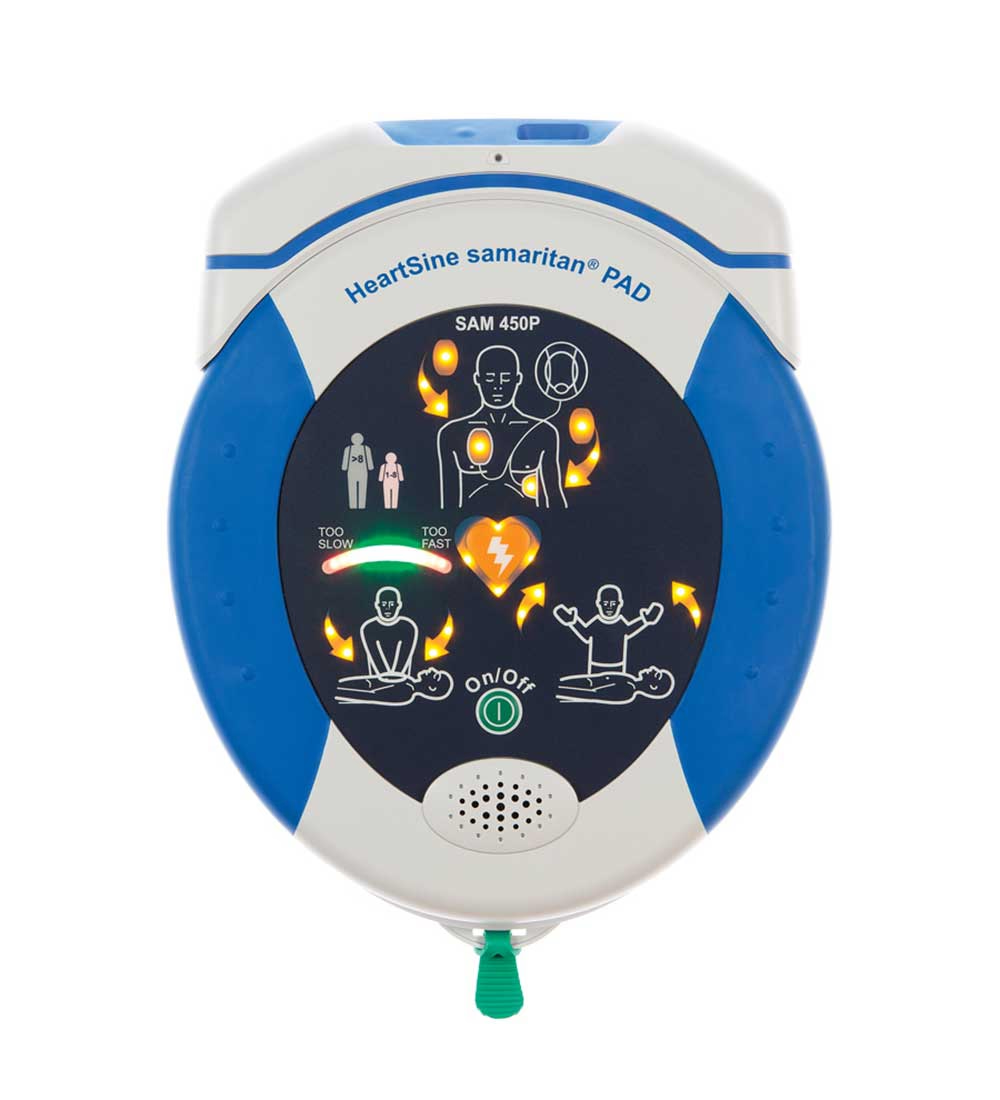
HeartSine Samaritan PAD 450P Gateway Connected
Mistakes to Avoid
Treating a connected AED as set-and-forget. Even with alerts, assign a program owner, review the dashboard monthly, and log corrective actions. Test alert emails and ensure backups receive them when staff are out.
Placing the AED where Wi-Fi is weak or blocked. Avoid metal cabinets inside elevator lobbies or mechanical rooms. Validate signal at the exact mounting spot and whitelist the device on your network before go-live.
Allowing consumables to drift. Combine automated alerts with an inventory plan. Keep one spare Pad-Pak per site, schedule replacements 60 days before expiration, and record lot numbers for recall tracking.
Connected AEDs with CPR feedback bring together readiness, data, and coaching that improves lay rescuer performance. Choose a device that fits your network, environment, and training model, then back it with a simple maintenance plan and clear ownership. The result is a fleet that is findable, functional, and documented, which is exactly what you need on the worst day in your facility.


