


A common misconception is that a bigger bag equals better care. In reality, readiness comes from the right refill kit, organized to your mission profile, verified for quality, and maintained on a consistent cycle. If contents do not match the calls you run, or if expiration dates slip, you are carrying dead weight.
The Bigger Picture
An EMT or first responder bag is a mobile formulary. Refill kits determine whether that formulary supports timely interventions along the MARCH sequence for trauma, and ABCs for medical calls. The best kit for a rural volunteer department that faces long transport times is not the same as the right kit for an event medical team working dense crowds, or a tactical medic supporting a contact team.
Think in terms of problems you must solve in the first 10 minutes. For trauma, that means rapidly controlling extremity hemorrhage, sealing open chest wounds, managing airway patency, decompressing only if within your scope and protocol, and initiating hypothermia prevention. For medical arrests, that means barrier CPR, AED readiness, and airway adjuncts appropriate to your training.
Refill kits are also logistics tools. Good kits keep critical items forward facing, reduce rummaging, and shorten turnover time between calls. They standardize layout across crews so a midnight handoff feels familiar. And they reduce the chance a vital item is missing when you reach for it.
How to Choose the Right Refill Kit
Use these criteria to evaluate kits side by side. Start with what you treat most, then verify that the included components meet recognized performance standards and that the kit will be easy to sustain over time.
Contents aligned to MARCH and your protocols
A trauma capable kit should support MARCH: at least two tourniquets that meet Committee on TCCC recommendations, Z-folded hemostatic gauze, compressed gauze and pressure dressings, vented occlusive chest seals, airway adjuncts like an NPA with lubricant, and thermal management such as an emergency blanket. For medical calls, include a barrier CPR mask or microshield, nitrile gloves, a pulse oximeter if permitted, glucose assessment supplies if within scope, and space for an AED and pads where applicable. Map every item to a specific step in your algorithm so nothing is ornamental.
Quality and compliance of critical devices
Not all gear is equal. Favor tourniquets with CoTCCC recommendation, for example C-A-T Gen 7 or SOF-T Wide. Choose hemostatic gauze with a proven agent like kaolin, for example QuikClot Combat Gauze, or chitosan-based dressings. Chest seals should be vented and robustly adhesive, for example HyFin Vent style. Shears should be 7.5 inch stainless. Gloves should be medical grade nitrile with adequate thickness. Eye protection and masks should meet applicable standards. When pediatric care is common, size airway adjuncts accordingly and add pediatric dosing aids.
Organization, access, and visibility
Refill kits that come pre-sorted into bleeding, airway, chest, and hypothermia modules cut search time. Look for color coded sleeves, clear pockets, and pull tabs labeled by function. A high visibility exterior, reflective accents, and MOLLE or hook and loop panels enable rapid attachment of frequently used tools. Ensure the kit nests cleanly in your primary bag layout so the items you touch most live high and near the opening.
Sustainment: shelf life, lot tracking, and resupply path
Adhesives, medications, lubricants, and batteries expire. Select refill kits that list lot numbers and expiration dates clearly on outer pouches. Favor vendors that maintain stable SKUs, offer replenishment modules for high burn items such as gloves, gauze, and seals, and ship with fresh stock. Plan a 90 day inspection cycle and a rotation plan so near dated supplies move forward and are trained with, not wasted.
What the Standards Say
Committee on Tactical Combat Casualty Care guidance underpins most modern bleeding control and airway practice in the prehospital tactical context. CoTCCC does not mandate brands, but it does publish recommended devices that have passed evidence based review. When your environment is high threat, align hemorrhage control, chest seals, and hypothermia measures with these recommendations and your medical director’s protocols.
For workplace environments, OSHA 1910.151 requires the availability of adequate first aid supplies and trained responders when medical services are not reasonably accessible. ANSI/ISEA Z308.1-2021 defines minimum content for Class A and Class B first aid kits. These are baselines for general workplace risks. EMS and public safety operations exceed these minimums, but the same principles apply: fit the kit to the hazards present and the response time.
For cardiac arrest care, American Heart Association CPR and ECC guidelines emphasize high quality compressions, rapid defibrillation with an AED, and barrier protection. Your refill kit should include a barrier device with a one way valve and oxygen inlet where compatible, spare AED pads within date, and a razor, wipe, and scissors in the AED compartment so defibrillation is not delayed.
Fire and rescue agencies that prepare for hostile event response may also look to NFPA 3000 for integrated response concepts and to local medical control for scope of practice. Across all standards, the theme is consistent: select functional components that support validated algorithms, and maintain them so they are ready on the worst day.
Build your bag around modules and par levels. For example, carry two CoTCCC recommended tourniquets on the exterior, plus one in the bleeding module. Stock two hemostatic gauze packs and two pressure dressings per provider. Assign a monthly quick check, a 90 day detailed inventory with expiration sweep, and a preplanned training rotation for near dated goods. Keep a laminated contents map at the lid so any crew member can restock to standard after a call.
A Recommended Option
If you want a mid sized platform that arrives organized and ready, consider a combo that pairs a purpose built bag with a professionally curated refill. The New TPU MOLLE Panel! Mid-Sized EMT First Responder Bag w/ Standard Fill Kit in fluorescent yellow packages a rugged Lightning X bag with a fill kit compiled by experienced EMS professionals. The interior uses dividers, elastic loops, and multiple compartments to keep bleeding control, airway, and medical modules distinct and quickly accessible, and the bright exterior boosts conspicuity at night or in crowds.
The included standard fill kit focuses on real world essentials that complement the bag’s layout, with fresh, individually packaged supplies organized for rapid identification. For departments that value sustainment and convenience, the single SKU simplifies purchasing and restocking, and each package is inspected for completeness before shipping. The bag is built for demanding service and is backed by Lightning X’s limited lifetime warranty on the bag, which helps control total cost of ownership over time.
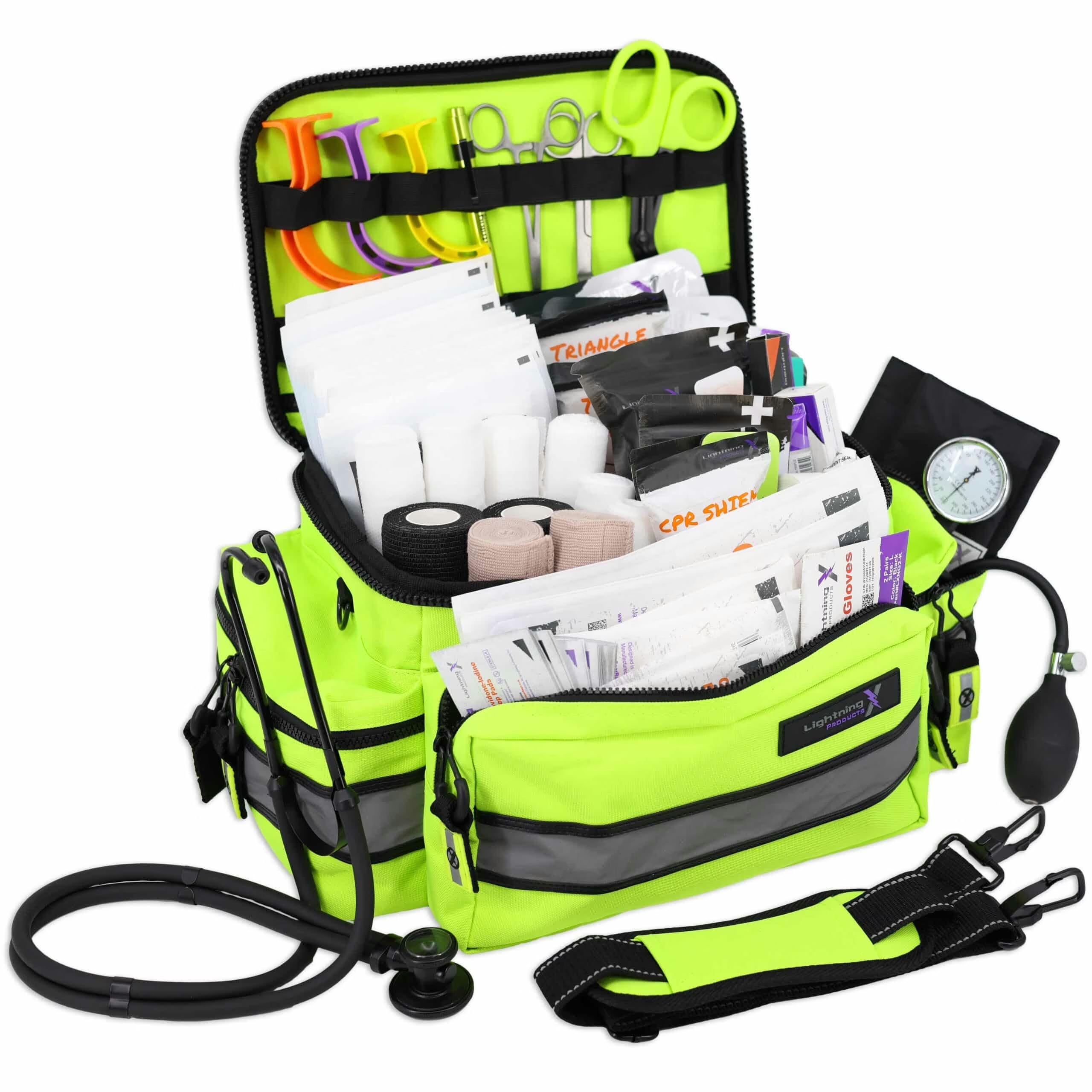
Our pick: Mid-Sized EMT First Responder Bag + Standard Fill
Mistakes to Avoid
Buying by parts count instead of function. A long list of minor items does not compensate for missing critical capabilities like a CoTCCC recommended tourniquet, vented chest seals, or a barrier device for CPR.
Mixing training and field gear. Mark and segregate trainers, for example blue handled practice tourniquets, so a simulated item never ends up in your live bag.
Ignoring sustainment. Adhesives and medications expire and batteries self discharge. Without a 90 day check and a near date rotation plan, you risk discovering failures when you can least afford them.
The right EMT bag refill kit is the one that solves the problems you actually face, aligns with recognized guidance, and can be sustained without drama. Define your mission, validate component quality, demand intuitive organization, and plan for restocking from day one. Do that well and your first 10 minutes will be faster, calmer, and more effective for the people who depend on you.


