



A common misconception is that mechanical CPR devices outperform skilled manual compressions in every setting. Evidence does not support routine use for all arrests, yet these devices can preserve high‑quality compressions when conditions make manual CPR inconsistent, such as long extrications, transport, or catheterization lab procedures. With U.S. out‑of‑hospital cardiac arrest survival still near 1 in 10, getting compressions right matters. Teams that understand when to deploy a device, and how to choose one that fits their workflow, can improve consistency and safety without delaying critical care.
The Bigger Picture
Manual chest compressions are the foundation of resuscitation. High‑quality CPR requires a rate of 100 to 120 per minute, a depth of 2.0 to 2.4 inches for adults, full recoil, minimal interruptions, and correct hand position. Fatigue, patient movement, limited space, and hazards can erode quality quickly. Automated chest compression devices, often called mechanical CPR devices, are designed to standardize rate and depth, reduce hands‑off time during transport, and free personnel for airway, vascular access, defibrillation, and diagnostics.
These systems are most valuable when manual CPR quality is hard to maintain. Examples include prolonged resuscitations, limited personnel situations, moving stretchers down stairwells, ambulance transport with safety restraints in place, and procedures like coronary angiography, where access to the patient’s chest must remain predictable. In some environments, such as aircraft cabins or tight industrial platforms, mechanical CPR can make the difference between chaotic pauses and continuous compressions.
It is important to align expectations with the evidence. Large trials and meta‑analyses have not shown a universal survival benefit to routine mechanical CPR use compared with well performed manual CPR. Guidance from resuscitation councils supports selective use when high‑quality manual compressions are impractical or unsafe. In other words, treat these devices as a tool that preserves quality under challenging conditions, not as a shortcut for training or a reason to delay defibrillation, airway management, or reversible causes.
How to Choose the Right Automated Chest Compression Device
Selection should reflect your teams, patients, and transport patterns. Try devices on your stretchers, in your rigs, and with your typical call types. Evaluate the following criteria in a structured trial before purchase.
Patient Fit and Anatomic Range
Confirm the permitted chest height and width. Bring manikins and large, short, and bariatric volunteers for sizing checks. Look for a backboard that stabilizes the thorax without excessive lift, and an interface pad that distributes force. Ensure you can achieve correct sternal positioning relative to the lower half of the sternum while avoiding the xiphoid. Ask vendors for real patient size ranges validated in testing, not just nominal adult labels. Check radiolucency claims if you plan to run the device during imaging.
Deployment Speed and Workflow
Measure time from decision to first device compression with your actual crew size. One‑piece frames that latch to a dedicated backboard often deploy faster and with fewer pinch points. Evaluate how easily you can align the piston over the sternum, how intuitive the height adjustment is, and whether you can pause and resume without losing alignment. Practice transitions for defibrillation, airway placement, IV or IO access, and moving the patient through doorways and onto stretchers.
Compression Quality and Protocol Control
Check that the device consistently delivers 100 to 120 compressions per minute at a depth of 2.0 to 2.4 inches with full recoil, including on compliant chests. Ask how the device compensates for variable chest resistance. Evaluate options for continuous compressions versus compressions with breaths, and how the device signals impending pauses for ventilations. Review alarms, feedback, and data logs that document rate, depth, pauses, and any overpressure events for quality improvement.
Power, Durability, and Service
Operational runtime varies by model. Prioritize hot‑swappable batteries, clear state‑of‑charge indicators, and an option for external power during extended resuscitations. Inspect ingress protection, impact resistance, and ease of decontamination. Service pathways matter. Devices that support software updates and event data downloads via common ports simplify maintenance and CQI review. Confirm turnaround times for preventive service and loaners, and document a daily readiness check that fits your station routines.
What the Standards Say
The American Heart Association adult basic life support guidelines specify rate, depth, minimal interruptions, and rapid defibrillation as priorities. The 2020 AHA Guidelines state that routine mechanical CPR for all patients is not recommended. Selective use is reasonable when high‑quality manual compressions are not possible or pose risk to providers, such as during transport or in environments where manual CPR quality cannot be maintained. ILCOR statements similarly support targeted use tailored to context.
For occupational programs, OSHA requires employers to ensure prompt medical attention and appropriate first aid supplies. While OSHA does not endorse specific mechanical CPR devices, programs that deploy them should integrate training, maintenance, and documentation into the emergency response plan. AED programs remain central to workplace cardiac arrest response and should be co‑located with any mechanical CPR equipment in high‑risk or remote sites.
In fire and EMS operations, NFPA standards emphasize response capability, safety, and quality improvement. Although they do not prescribe specific mechanical CPR brands, agencies should align device use with their medical director’s protocols, training plans, and data review processes. In tactical or austere care, TCCC guidance prioritizes treatment of reversible life threats like hemorrhage and airway compromise. Cardiac arrest from traumatic causes often has different priorities, and routine chest compressions, manual or mechanical, may not be indicated until bleeding and airway issues are addressed. Always apply your authority having jurisdiction protocols.
Decide your device algorithm before the first call. For example, continuous compressions during transport with asynchronous ventilations, then compressions‑with‑breaths when stationary for rhythm checks. Preassign roles for device setup, piston alignment, and battery swaps. A rehearsed script prevents 30 to 60 second pauses that can erase any theoretical benefit.
A Recommended Option
For agencies seeking a streamlined, serviceable platform, the Defibtech Lifeline ARM Automated Chest Compression System is worth a close look. It allows real‑time protocol selection between continuous compressions and compressions with breaths using simple softkeys. Audible and visual cues prepare the team for ventilation pauses, which can help synchronize airway care without guesswork. The compression module uses a brushless DC motor with software control to maintain target depth and rate as chest resistance changes, and a dedicated backboard and rigid single‑piece frame help keep alignment stable when moving the patient.
From a maintenance and CQI perspective, the Lifeline ARM supports event capture and post‑event review via USB, and the same port enables software updates using Defibtech ACC Support Software. A service indicator light prompts scheduled maintenance. The platform ships in a highly visible backpack with custom foam for components, which is practical for multi‑level facilities and special events. Battery logistics are thoughtful, including fast swaps, bidirectional insertion, and the option to operate from external power while charging. These details matter when your team is balancing scene safety, transport, and continuous compressions.
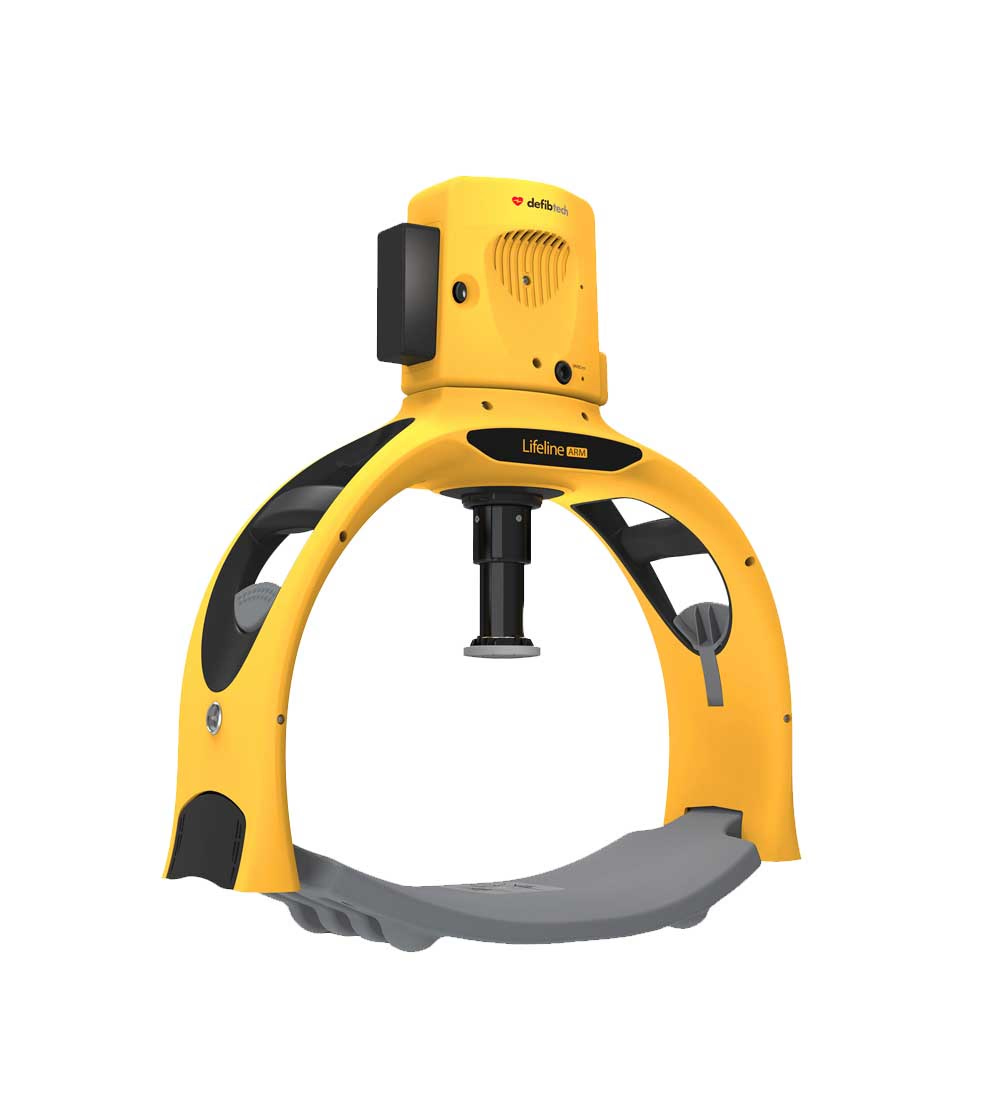
Our Pick: Defibtech Lifeline ARM
Mistakes to Avoid
Long pauses during setup. A pause over 20 to 30 seconds can negate benefits. Practice a two‑rescuer sequence: backboard under patient during ongoing manual CPR, frame docked and piston prepositioned, quick height set, then immediate resume. Time the process during training and make it a KPI.
Using on the wrong patient. Most devices are adult only and have minimum and maximum chest dimensions. Traumatic arrest from exsanguination or penetrating injury calls for hemorrhage control and airway management first per protocol. Confirm indications and contraindications before committing to mechanical CPR.
Poor power and maintenance discipline. Arriving with a low battery or outdated software turns a premium tool into a liability. Implement a daily readiness check, rotate and top off batteries, document service alerts, and download event data into your CQI process.
Mechanical CPR devices are a capability multiplier when matched to the right scenarios, integrated into clear protocols, and maintained with the same rigor as your monitors and AEDs. Choose a platform that fits your patients and vehicles, train until your deployment is smooth and brief, and use data from each event to refine performance. The goal is not to replace skilled hands, it is to ensure consistent compressions when circumstances make that human standard hard to sustain.


