



In cardiac arrest, each minute without defibrillation can reduce survival by 7 to 10 percent. That clock starts before first responders arrive, which is why realistic AED practice is not a nice-to-have. The challenge is throughput. Many programs still rotate one trainer AED around a crowded classroom, which creates idle time and shallow practice. Multi-station training, where several teams work in parallel under centralized control, solves both problems if it is planned and executed well.
The Bigger Picture
Multi-station AED training is about two outcomes: better skills in less time, and more consistent scenario fidelity for every learner. When four stations practice simultaneously, you quadruple repetitions of core tasks like powering the AED, pad placement landmarks, clearing the patient, and resuming compressions after shock advisory. You also reduce waiting, which improves engagement and retention.
Consistency matters just as much. If Station A is practicing shockable rhythms while Station B hears only generic prompts, learners will leave with different mental models. Centralized scenario control and synchronized timing keep the entire room on the same clinical sequence: assess responsiveness, call for help, start compressions, apply pads, analyze rhythm, clear, deliver shock when advised, and resume compressions with minimal delay.
Finally, multi-station design supports role clarity. Team members rotate through compressor, AED operator, and team leader roles without bottlenecks. That variety trains communication under pressure, which is a real differentiator when seconds count.
How to Choose the Right Multi-Station AED Training Setup
Before you buy additional trainer units or a remote controller, define what success looks like in your room. Consider room size, class throughput targets, noise levels, and the certification scope you teach, for example Heartsaver AED, BLS, or first aid with AED. The four criteria below will help you optimize equipment and workflow.
Compatibility and control range
Match controllers to your trainer AED models and verify how many units a single controller can manage at once. Check the control method, for example infrared line-of-sight or radio frequency, and test range in your actual classroom with people moving around. Aim for reliable control from your instructor position and along the aisles you routinely walk.
Scenario fidelity and variability
Your controller should quickly select common rhythms and training states, such as ventricular fibrillation, non-shockable rhythms with no shock advised, motion artifact, and low-battery prompts. The faster you can trigger transitions, the more repetitions you can run on key skills like clear communication before shock and immediate compression resumption.
Classroom logistics and audio management
Four stations mean four speakers. Ensure you can adjust volume per unit so prompts remain audible without drowning out team communication. Arrange stations in corners or staggered rows to reduce echo. If your controller adjusts volume globally or per unit, plan a quick sound check before scenarios start.
Durability, power, and reset speed
Look for controllers that use common batteries, have positive-click buttons, and provide immediate visual feedback when you change a scenario. Fast reset between runs is critical for maintaining pace. Keep spare batteries in your instructor kit and label each trainer unit with a station number that the controller can mirror.
What the Standards Say
The American Heart Association emphasizes early defibrillation, minimal interruptions in chest compressions, and clear team communication across Heartsaver and BLS curricula. Training should build muscle memory for rapid pad placement, safe clearing before shock, and immediate return to compressions after the shock or no-shock prompt. Use scenario tools to reinforce these time-dependent behaviors repeatedly.
OSHA encourages workplace AED programs that include employee training, device maintenance, and practice drills integrated into the emergency response plan. For employers, multi-station training can qualify more responders in less time, which supports broad coverage goals without expanding class hours. Keep records of training dates, instructor credentials, and equipment maintenance alongside your emergency action plan.
Many training centers also align with ILCOR recommendations that stress high-quality CPR with minimal pauses and early defibrillation. While specific cadence and content come from your training organization, the operational takeaway is consistent: create frequent, realistic repetitions that compress recognition, AED use, and CPR into a tight cycle.
Use centralized control to teach the rhythm of care, not just device steps. Trigger analysis while learners are still applying pads, then pause them to clear. If a shock is advised, require a visible and verbal all-clear before pressing the shock button. Immediately cue compressions after shock by advancing the scenario. This builds the habit of short, purposeful pauses.
A Recommended Option
If your program uses Defibtech standalone Lifeline Trainer AEDs, a compact instructor controller can streamline multi-station flow. The Defibtech Training Remote Control DTR-400 is designed to manage up to four Lifeline Trainer units at once. Instructors can select scenarios, adjust volume, and manually simulate ventricular fibrillation to pressure-test team communication and timing. The ability to flip stations from shockable to non-shockable within seconds helps you vary practice without walking the room.
In busy certification days, small control efficiencies add up. Centralized scenario selection means you can run synchronized drills, then quickly offset stations by 10 to 20 seconds to create staggered analysis and shock moments. That pattern lets you observe, coach, and debrief each team while the rest of the room continues working, which maximizes contact time without sacrificing fidelity.
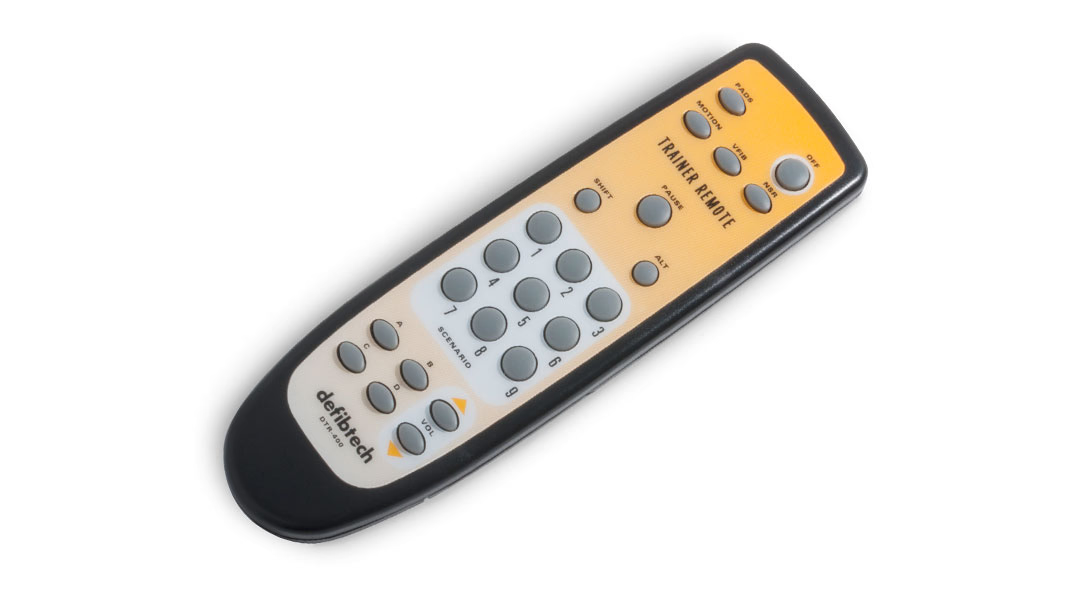
Our Pick: Defibtech Training Remote Control DTR-400
Mistakes to Avoid
Running identical scenarios without clear objectives. Define the specific behavior you are reinforcing each round, for example pad placement landmarks, clear communication before shock, or hands-on time after analysis, and select scenarios accordingly.
Letting audio chaos reduce learning. Four trainers at max volume mask team cues. Start with mid-level volume, space stations to reduce echo, and use your controller to balance audio so learners hear prompts and each other.
Neglecting preflight checks. Before class, confirm controller batteries, pair or align with each station, verify line-of-sight if using infrared, and test a full scenario cycle. Label stations to match your control map so you can correct a struggling team immediately.
Effective multi-station AED training blends clinical accuracy with classroom choreography. When you pair sound standards with smart equipment choices and deliberate scenario control, you multiply meaningful repetitions, keep every learner engaged, and build habits that translate to real emergencies. Start with clear objectives, choose tools that give you precise control, and let synchronized practice do the heavy lifting.


