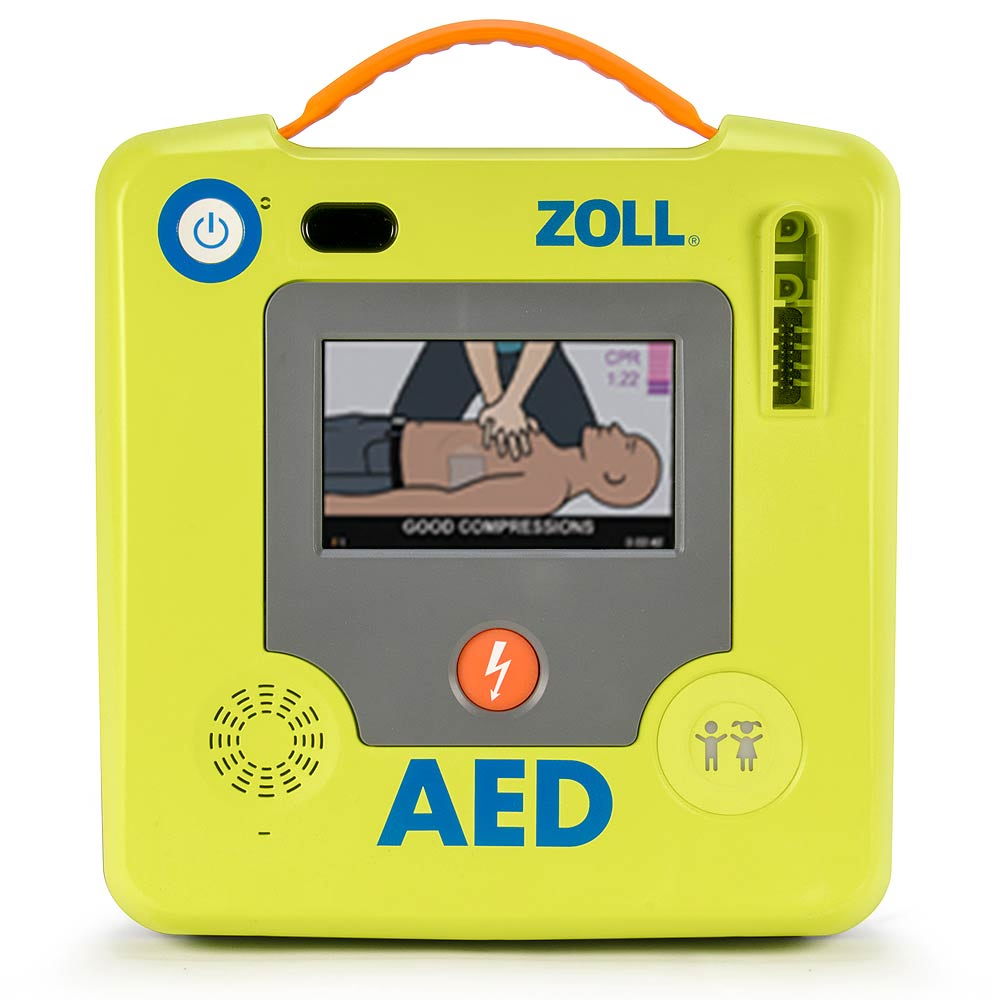
Keeping lifesaving skills current is essential for readiness in homes, workplaces, schools, and clinics. Whether you are a safety manager, healthcare professional, or community responder, knowing how often to renew cardiopulmonary resuscitation (CPR), automated external defibrillator (AED), and first aid training protects people and shields organizations from liability. This guide explains recommended intervals, regulatory considerations, and practical ways to build a sustainable renewal program.
Key Takeaways
- Most CPR, AED, and First Aid certifications are valid for two years; some roles and states require annual refreshers.
- Skills decline within months without practice, so short, frequent refreshers between certifications improve performance.
- OSHA expects covered employers to ensure prompt first aid capability and annual Bloodborne Pathogens training.
- High-risk industries, childcare, and aquatic settings often mandate shorter renewal cycles.
- Use a calendar, LMS reminders, and brief skills drills to keep teams confident and compliant.
Why Renewal Matters and Typical Certification Cycles
Formal certifications validate that learners can perform critical interventions safely and effectively. Over time, however, memory and muscle coordination fade. Research has repeatedly shown that CPR compression depth, rate, and recoil quality decline within months when skills are not refreshed. That is why most recognized training organizations set expiration dates and encourage interim practice.
Common validity periods
- CPR and AED for lay responders: typically two years through major providers such as the American Heart Association and the American Red Cross.
- Basic Life Support (BLS) for healthcare providers: two years, with many employers encouraging more frequent practice sessions.
- First Aid: two years for general workplace responders, with local variations in some regulated settings.
In addition to certification cycles, employers must address regulatory expectations. OSHA 29 CFR 1910.151 requires that adequate first aid supplies be available and that someone be trained to render first aid when medical services are not reasonably accessible. For Bloodborne Pathogens, 29 CFR 1910.1030 requires annual training for covered employees, which often coincides with first aid and CPR refresher discussions.
Evidence from international resuscitation councils indicates that skills decay can begin within three to six months without practice, and that shorter, more frequent refreshers improve retention and performance.
In practice, a two-year certification is the baseline; it is not a guarantee of readiness. The best programs combine formal recertification on schedule with short, low-dose refreshers to maintain skills.
Renewal Timelines by Role and Industry
Renewal frequency depends on what you do, who you serve, and your risk environment. Begin with your certifying organization’s standard validity period, then adjust based on regulation, licensing, or company policy. Below are common timelines and considerations by role or setting.
General workplace responders
- CPR, AED, and First Aid: recertify every two years.
- Bloodborne Pathogens: annual training if employees have occupational exposure.
- Refreshers: brief practice every 6 months is recommended to counteract skill decay.
Healthcare providers
- BLS: recertify every two years, often aligned with credentialing cycles.
- Advanced courses like ACLS or PALS: typically two years, but employers may require more frequent mock codes or competencies.
- Quarterly or biannual skills checks help maintain compression quality and team choreography.
Childcare, education, and youth programs
- CPR, AED, and Pediatric First Aid: many states require renewal every one to two years; check childcare licensing rules.
- Schools: state or district policy may set annual refreshers for athletic staff, coaches, and bus drivers.
Public safety, aquatic, and fitness settings
- Lifeguards: many employers require annual CPR and First Aid renewal plus frequent in-service drills.
- Law enforcement and fire service: follow agency policy, often with annual refreshers and scenario-based practice.
- Fitness professionals: most certifying bodies require current CPR/AED, renewed every two years or per agency rule.
Industrial, construction, and remote worksites
- CPR, AED, and First Aid: two-year cycle, with some companies mandating annual refreshers due to elevated hazards.
- High-risk roles, such as confined space attendants or electrical workers, often have more frequent drills.
OSHA expects employers to ensure prompt first aid is available. If medical care is not within a reasonable proximity, at least one person must be adequately trained to render first aid and supplied accordingly.
When in doubt, align with the strictest applicable requirement, such as a state childcare rule or a company’s internal safety policy. Document the authority for your chosen interval and communicate it clearly in your safety plan.
CPR and AED Skills: How Often to Refresh and Practice
High-quality CPR and rapid defibrillation are the strongest determinants of survival in sudden cardiac arrest. Certification every two years is common for CPR and AED, but optimal readiness requires practice more often. Plan for short, structured refreshers throughout the year to preserve technique and confidence.
Low-dose, high-frequency refreshers
- Micro-sessions: 10 to 15 minute drills monthly or quarterly to rehearse compressions, rescue breaths when indicated, and safe AED use.
- Feedback devices: manikins with real-time compression metrics help learners self-correct depth, rate, and recoil.
- Team choreography: practice roles for compressor, ventilations, AED operator, and scene safety lead.
American Heart Association guidance supports brief, frequent practice to improve retention, recommending that organizations supplement formal certification with interim skill sessions whenever feasible.
AED-specific competencies
- Pad placement and switchovers: rehearse correct anterior-lateral placement on adult and pediatric models.
- Shock safety: emphasize clear communication, visual checks, and no-contact before analysis or shock.
- Scenario practice: simulate agonal breathing, bystander panic, or confined spaces to rehearse realistic decision making.
Integrate practice with device maintenance
- Monthly checks: verify AED status indicator, battery life, and pad expiration.
- After-use reviews: conduct debriefs, restock pads and batteries, and document the event for quality improvement.
- Supply alignment: keep spare adult and pediatric pads, a rescue kit, and a maintenance log near each unit.
By pairing formal renewal with bite-sized practice and routine AED maintenance, you create a reliable safety net that shortens time to first shock and improves CPR quality metrics when seconds matter.
First Aid Certification: Content Updates and Recertification Windows
First aid courses cover a wide spectrum of emergencies, from bleeding and burns to allergic reactions and opioid overdose response. The knowledge base and best practices evolve as new evidence emerges. Although two years is the prevalent certification cycle, many organizations find value in annual refreshers, especially where hazards are dynamic.
Core content that benefits from regular updates
- Severe bleeding control: tourniquet use, wound packing, and pressure application techniques.
- Airway and breathing emergencies: choking response for adults, children, and infants.
- Environmental exposures: heat illness, hypothermia, and chemical splashes with eyewash protocols.
- Medical emergencies: stroke recognition using FAST, chest pain assessment, diabetic emergencies, and anaphylaxis with epinephrine auto-injectors.
Some jurisdictions and sectors specify additional training. Schools and childcare often focus on pediatric content. Industrial sites may require chemical-specific first aid and eyewash station drills. Many employers add opioid overdose response with naloxone in high-risk communities. Your renewal schedule should match these realities, ensuring content is relevant to actual hazards.
First aid requirements vary by state and industry. Review state licensing rules, workers’ compensation directives, and consensus guidelines annually to confirm your program reflects current standards of care.
Practical renewal strategy
- Two-year certification as a baseline, with short annual refreshers aligned to injury trends or near-miss reports.
- Scenario days: rotate topics quarterly, such as bleeding control, burns, and allergic reactions, to keep knowledge active.
- Job hazard analysis alignment: tailor skills practice to the most likely events in your environment.
Timely renewal, paired with targeted refreshers, preserves confidence and reduces hesitation, which translates to faster response and better outcomes long before EMS arrives.
Designing a Compliant, Sustainable Renewal Program
Consistency is the key to compliance. A structured renewal program prevents last-minute scrambles, minimizes lapses, and improves performance during real events. Treat training like a lifecycle that includes planning, delivery, practice, documentation, and quality improvement.
Build your compliance calendar
- Inventory certifications: record names, course types, issue dates, and expiration dates in a central tracker or LMS.
- Set reminders: schedule notifications at 120, 60, and 30 days before expiration to allow retesting or blended learning options.
- Stagger cohorts: spread classes across the year to avoid operational disruptions and instructor bottlenecks.
Choose the right delivery model
- In-person classes: ideal for hands-on practice and team dynamics.
- Blended learning: online theory followed by a local skills session that satisfies certification requirements.
- Skills-only renewals: for returning learners who meet prerequisites per the training organization’s policy.
OSHA’s Bloodborne Pathogens standard requires annual training for covered workers. Coordinate this requirement with CPR and First Aid refreshers to streamline compliance and reinforce safe response to exposure events.
Elevate realism and readiness
- Mock drills: conduct unannounced scenarios in high-risk areas and debrief with clear action items.
- Device integration: practice with your exact AED model and first aid supplies to reduce surprises.
- Data-driven improvements: use manikin feedback reports and incident reviews to target weak points.
Document everything
- Maintain rosters, certificates, and skill checklists for audits and insurance requirements.
- Track equipment checks, pad and battery expirations, and restocking events in the same system.
- Assign ownership: designate a program lead and site champions to keep momentum.
A thoughtful program balances compliance with practicality. When renewal and refreshers are predictable, bite-sized, and relevant, participation rises and confidence grows. The result is a culture where immediate, competent action is the norm.
Final Thoughts
Most CPR, AED, and First Aid certifications renew every two years, yet real readiness depends on more frequent, focused practice. Align timelines with your risks and regulations, then reinforce skills through short refreshers to counteract natural skill decay.
Need to equip your team for success? Explore MyAED for AEDs, trainer units, manikins with feedback, first aid kits, and replacement pads and batteries. Our team can help you map renewal schedules, select the right training tools, and keep your program compliant and response ready.