Guests choose hospitality businesses for comfort, safety, and service. Medical emergencies are rare but inevitable, and how a property responds in the first minutes can save a life, protect reputation, and reduce liability. This guide explains how hotels, resorts, restaurants, and event venues can prepare, from planning and equipment to training and compliance.
Key Takeaways
- Build a clear medical emergency action plan (MEAP) that assigns roles, maps equipment, and defines communication steps.
- Place automated external defibrillators (AEDs) to achieve a three minute time to first shock, and stock compliant first aid and bleeding control supplies.
- Train front desk, housekeeping, food service, security, and managers in CPR, AED use, choking relief, and trauma care.
- Inspect and document AED and kit readiness monthly, replace expiring items, and register equipment with local emergency medical services (EMS) as required.
- Coordinate with EMS and legal counsel about local AED and Good Samaritan protections, then run realistic drills to keep skills sharp.
Understanding Medical Risks in Hospitality Environments
Hospitality settings bring together diverse ages and health backgrounds. That mix, combined with unfamiliar environments, food service, alcohol, pools, gyms, and high foot traffic, can elevate certain medical risks. The most time critical events include sudden cardiac arrest (SCA), choking, anaphylaxis, severe bleeding, diabetic emergencies, heat illness, and falls. A plan that anticipates these situations helps staff respond fast and confidently.
Common emergencies you should anticipate
- SCA in guest rooms, lobbies, restaurants, fitness centers, and conference spaces.
- Choking during meals or banquets, including events with hurried service or dim lighting.
- Allergic reactions from food allergens, insect stings, or latex exposure.
- Traumatic injuries from slips and trips, poolside incidents, or kitchen and housekeeping accidents.
- Overdose, hypoglycemia, dehydration, or heat related illness during special events and outdoor activities.
Out of hospital sudden cardiac arrest affects more than 350,000 people in the United States each year. Survival decreases by 7 to 10 percent for every minute without CPR and defibrillation, according to widely cited American Heart Association data.
Why hospitality is unique
Guests may not know where help is, they may be traveling alone, and language barriers can slow response. Properties often cover large footprints, with tall towers, dispersed villas, or sprawling convention space. That makes equipment placement, two way communication, and clear wayfinding essential. Food and beverage operations create additional risk for choking and allergic reactions. Pools, hot tubs, and gyms add cardiac and trauma risk, especially after alcohol or during strenuous activity.
Assess your portfolio: catalog onsite amenities, peak occupancy, distance to the nearest EMS station, and average EMS response times. These factors drive how many AEDs you need, where to position first aid and bleeding control kits, and how to staff and train across shifts. A thorough risk profile is the foundation for a practical plan.
Designing a Medical Emergency Action Plan for Hotels and Venues
A well written medical emergency action plan (MEAP) turns good intentions into coordinated action. Build a concise, property specific document that staff can reference under stress, then reinforce it with drills and signage. The plan should define roles, outline communication, indicate equipment and routes, and describe post incident steps.
Core components of an effective MEAP
- Roles and responsibilities: Assign who calls 911, who brings the AED and kits, who performs CPR, who manages crowd control, and who meets EMS at the entrance or elevator.
- Communication workflows: Standardize language for radio or phone, capture the exact location descriptor, and confirm callback numbers. Provide translation resources and pocket cards for non native speakers.
- Location intelligence: Map AEDs, first aid, bleeding control kits, stairwells, elevators, and the quickest routes from lobby to guest rooms and event spaces.
- Step by step response: Recognize emergency, activate 911, send for AED, start CPR, apply AED, continue care until EMS arrives, then transition scene control to responders.
- After action tasks: Document the incident, preserve AED event data, notify risk management, replace used supplies, and conduct a debrief within 48 hours.
OSHA general duty and medical services rules, including 29 CFR 1910.151, expect employers to ensure prompt medical attention for employees. While hospitality is guest focused, these frameworks reinforce the value of a written emergency plan, trained responders, and accessible supplies.
Make the plan usable under pressure
- Keep the MEAP to a few pages with a one page quick reference. Use plain language and large fonts.
- Post location maps in staff areas, security, banquet command posts, and engineering shops. Add QR codes that link to a digital version.
- Integrate with fire and evacuation procedures, elevator priorities, and event risk assessments.
- Coordinate with your insurance carrier and legal counsel, especially regarding local AED and Good Samaritan laws.
Practice the plan with short, unannounced drills on all shifts, including night audit and weekend event teams. Measure time to recognition, time to AED arrival, and time to first shock during simulations. These objective metrics guide improvements and justify investment to leadership.
Equipping Your Property: AEDs, First Aid, and Bleeding Control
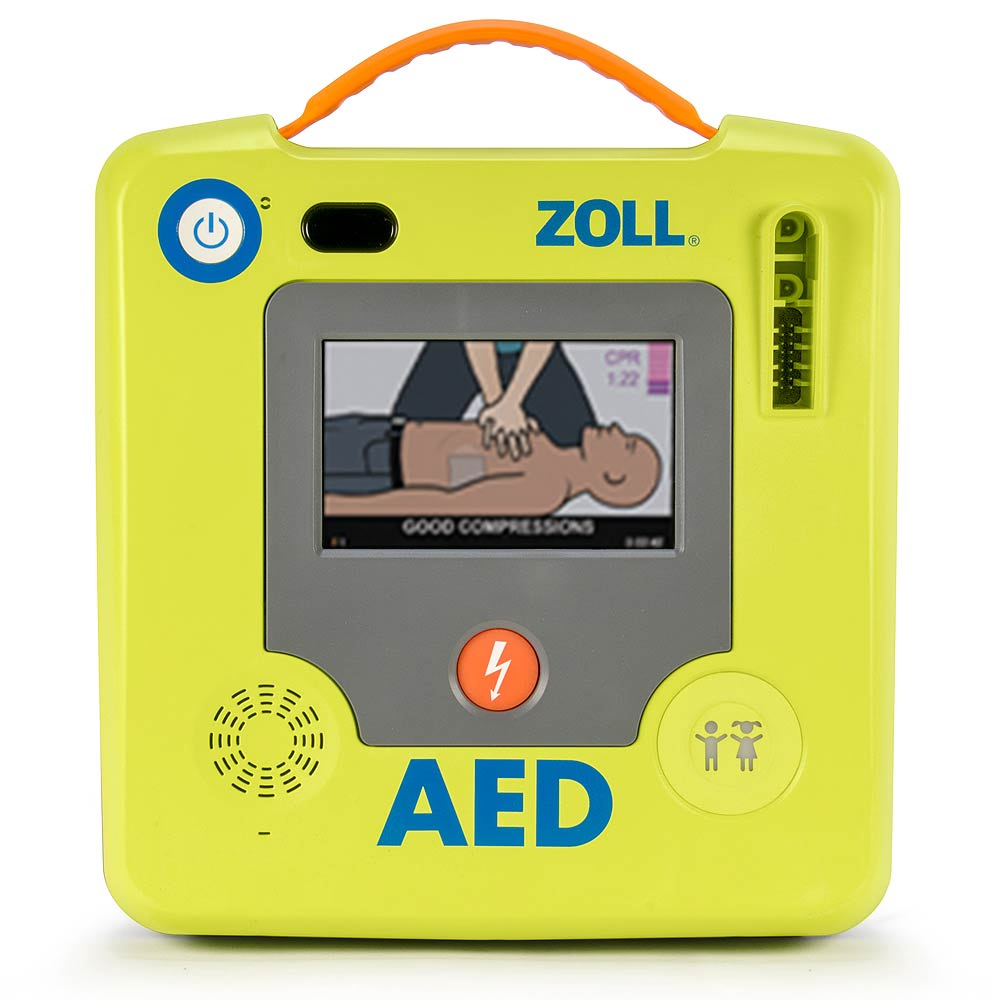
Fast access to the right equipment saves lives. The cornerstone is the automated external defibrillator (AED), which analyzes heart rhythm and prompts rescuers with voice and visual cues. Pair AEDs with compliant first aid stations and bleeding control kits to manage the full range of likely emergencies.
Choosing and placing AEDs
- Coverage goal: Place AEDs so responders can retrieve and apply a shock within three minutes. Large properties often need units in lobbies, banquet foyers, ballrooms, restaurants, fitness centers, pool decks, and high guest room floors.
- Key features: Consider CPR feedback, bilingual prompts, pediatric capability, ruggedness and ingress protection for pool areas, and low maintenance pads and batteries.
- Visibility and access: Mount units in alarmed cabinets with universal AED signage and directional arrows. Avoid locked rooms, cluttered closets, or high shelves.
- Redundancy: Stock spare adult pads and a set of pediatric pads for guests under eight years or under 55 pounds. Keep an extra battery on large properties.
Many jurisdictions require AED owners to register devices with local EMS or a state database, maintain readiness logs, and report usage. Check your state AED law summary and follow manufacturer service intervals for pads and batteries.
First aid and bleeding control readiness
- ANSI/ISEA Z308.1 compliant kits: Select Class A kits for general areas and Class B kits for kitchens, engineering, and security where higher risk exists. Place kits where staff work and near guest activity hubs.
- Bleeding control kits: Stock tourniquets, hemostatic dressings, pressure bandages, gloves, and trauma shears. Label kits clearly and store near AEDs for quick grab and go.
- Special considerations: Epinephrine auto injectors and naloxone may be permitted under local standing orders. Coordinate with a medical director and comply with storage, training, and documentation requirements.
- Environmental risks: Add rescue tubes or hooks at pools, throw rings, and minimal reach poles. Provide thermal blankets for exposure and pediatric masks for family centric resorts.
Standardize your equipment list across the property and brand. Simplicity speeds action. Train staff to use the exact models you deploy, then post visual guides and QR codes on cabinets that link to quick videos and checklists.
Training Staff for Fast, Confident Response
Equipment saves lives only when people know how to use it. Build a culture of readiness by training a critical mass of employees in life saving skills and by practicing where emergencies actually occur. Aim for coverage on every shift and at every major location, including events staffed by temporary personnel.
Priority skills for hospitality teams
- CPR and AED use: Hands only CPR for unresponsive, non breathing adults, rescue breaths for children when trained, and safe AED operation.
- Choking relief: Abdominal thrusts for adults and children, back blows and chest thrusts for infants, along with guidance on when to stop and when to activate EMS.
- Bleeding control: Tourniquet application, wound packing with hemostatic gauze, and direct pressure techniques aligned with Stop the Bleed education.
- Allergy and overdose response: Recognize anaphylaxis and opioid overdose, then follow property policies regarding auto injectors or naloxone where permitted.
Make practice realistic and continuous
- Run brief, scenario based drills in lobbies, restaurants, guest floors, kitchens, and pool decks. Practice radio calls, AED retrieval paths, and elevator coordination.
- Use objective targets: under one minute to activate 911, under two minutes to AED arrival, and under three minutes to first shock in simulated SCA.
- Onboard new hires within 30 days and recertify staff every one to two years. Provide micro drills and monthly skill refreshers to combat decay.
- Equip teams with pocket cards, multilingual cue sheets, and clear signage so non certified staff can still assist by fetching gear and guiding EMS.
Recognize and reward successful drills. Post results, analyze delays, and address bottlenecks such as key controlled doors or unclear location naming. Confidence rises when staff see that leadership values readiness as part of great service.
Operations, Maintenance, and Compliance for Lasting Readiness
Reliability is non negotiable. A structured inspection and documentation rhythm keeps AEDs and kits ready and supports legal defensibility. Pair checklists with clear ownership so nothing falls through the cracks during turnovers or peak season.
Inspection cadence and documentation
- Daily or weekly visual checks: Verify AED status indicators, cabinet alarms, and that kits are sealed and stocked. Confirm batteries and pads are present.
- Monthly logged inspections: Record device status, pad and battery expiration dates, cabinet condition, and signage visibility. Use digital logs with reminders.
- After use service: Download AED event data, clean and disinfect devices, replace pads and batteries as needed, and restock all supplies the same day.
- Lifecycle management: Track warranty dates and plan for replacement five to eight years from purchase or per manufacturer guidance.
After any AED use, many manufacturers recommend replacing electrode pads, checking the battery, and reviewing the unit for damage before returning it to service. Maintain records of all inspections and service actions.
Compliance, protection, and privacy
- Good Samaritan and AED laws: Most states offer liability protections for lay rescuers and AED programs that meet training and maintenance requirements. Verify local mandates for registration and medical oversight.
- OSHA and ANSI references: While oriented to workers, OSHA expectations and ANSI/ISEA Z308.1 first aid standards are useful benchmarks in mixed employee guest environments.
- Accessibility and signage: Use universally recognized AED symbols and directional arrows. Place cabinets at visible heights and ensure paths are clear of merchandise or decor.
- Confidentiality: Limit incident details to those who need to know. Protect any medical information and handle reports through risk management channels.
Conduct an annual program review with leadership, engineering, security, and human resources. Reassess property changes such as new event spaces, restaurant concepts, or amenity additions that may alter your risk profile and equipment layout.
Coordinating With EMS and Community Partners
Successful outcomes improve when hospitality teams and community responders are aligned. Early notification, clear directions, and familiar layouts speed access to the patient and reduce delay to definitive care. Build relationships before an emergency occurs.
Practical steps to align with EMS
- Meet with local EMS and fire: Share property maps, AED locations, elevator controls, and any access codes. Ask for preferred arrival points and staging areas for events.
- Share response times: Understand average times for your address. If longer than ideal, add more AEDs or train additional staff to close the gap.
- Register AEDs: Where available, enroll devices in local registries that dispatch can reference during 911 calls.
- Host community training: Offer CPR, AED, and bleeding control classes to staff and neighbors. Practice builds confidence and strengthens goodwill.
Dispatchers provide pre arrival instructions for CPR and AED use. Coach callers to put phones on speaker, start compressions, and follow AED prompts while another staff member meets responders with elevator control ready.
For large conferences, concerts, or holiday events, complete a targeted risk assessment and create a temporary medical post with supplies and trained staff. Share event schedules and floor plans with security and EMS so they can pre plan routes and staging areas.
Final Thoughts
Prepared hospitality businesses save lives and protect their brands. A clear plan, well placed AEDs and supplies, confident training, and disciplined maintenance create a reliable safety net for guests and staff alike.
Ready to strengthen your program? Explore AEDs, first aid stations, and bleeding control kits at MyAED, or contact our team for a site specific assessment and product recommendations. We can help you design coverage, select gear, and implement training that fits your property and budget.