



Dental pain is a top driver of unscheduled care, with roughly 2 million emergency department visits in the United States each year attributed to dental conditions. In field medicine and workplace response, a small oversight like skipping an occlusion check can prolong pain and mission downtime. Articulating film is a low-cost, high-yield component that helps responders confirm whether a high spot is the culprit, so patients get relief faster and definitive care is not delayed.
The Bigger Picture
Articulating film, often called articulating paper or occlusion film, is a simple consumable that marks tooth contact points during light tapping or grinding. In emergency and austere settings, its value is not cosmetic. It provides functional feedback that can explain why a patient reports sharp pain on biting, post-injury malocclusion, or discomfort after a temporary restoration or splint.
Common field scenarios include cracked cusps or fractured restorations after impact, displaced teeth that were repositioned and stabilized, and provisional fillings or onlay repairs placed to control sensitivity. Any of these can leave a high contact that irritates the periodontal ligament or a newly restored surface. Without confirmation, a provider may chase pain with analgesics alone. With a quick occlusion check, the team can identify the offending spot and either adjust it if scope and tools allow, or offload it with temporary materials and a protective diet plan.
Articulation film is different from bite registration elastomers. Film does not capture a 3D bite record. It creates visible, inked contact points that guide adjustments and clinical decision making. It will not diagnose caries or periapical disease. It simply shows where force concentrates when the patient bites, which is often exactly the piece of information a field provider needs to reduce symptoms until definitive dental care is available.
How to Choose the Right Dental Articulation Film
Not all articulating films behave the same under pressure, saliva, or gloved handling. The best choice for an emergency kit or tactical set respects the realities of wet fields, limited lighting, and rapid workflows. Use these criteria to select confidently.
Thickness and Flex Compliance
Ultra-thin film records high contacts without creating artifacts. Thicker stock can falsely increase vertical dimension or bridge shallow fissures, which hides true high spots. In field use, thin film that flexes into occlusal anatomy captures posterior contacts accurately while avoiding premature markings on cusp tips. Look for sheets that are thin enough to feel almost weightless and that conform without crinkling.
Marking System and Contrast
Dual-color surfaces, commonly black on one side and red on the other, allow quick differentiation of maxillary and mandibular contacts or progression from coarse to fine checks. High-density pigments should leave crisp, saturated dots and ovals instead of dusty smears. In low-light or headlamp conditions, contrast is crucial. Choose a film that prints bold marks you can interpret in a single glance.
Moisture Handling and Fidelity
Saliva, irrigation, and breath humidity can wash out inferior inks. Moisture-resistant coatings help marks stay sharp and transfer predictably even when the field is not perfectly dry. The film should resist bleeding or feathering, and it should avoid leaving random specks on enamel that look like false positives. Consistency under wet conditions is what separates clinic-grade films from commodity paper.
Durability, Size, and Packaging
Sheets that stretch instead of snapping survive multiple placements with forceps. Tear-prone paper can leave fragments in the mouth or waste time during re-grips. Compact packs fit IFAK pouches, dental modules, and mobile carts. For gloved handling, choose a format that loads easily in hemostats and withdraws without snap back, so the marks you read are not distorted by drag.
What the Standards Say
There is no single federal mandate that specifies a brand or type of articulating film for first aid kits. Selection is guided by infection control requirements and by best practice recommendations for managing dental problems in resource-limited environments.
OSHA’s Bloodborne Pathogens Standard, 29 CFR 1910.1030, requires engineering and work practice controls to minimize exposure to blood and saliva. In practical terms, that means using clean or single-use items, hand hygiene, and proper disposal. Articulating film is a single-use item and should not be reused between patients.
The CDC’s Guidelines for Infection Control in Dental Health-Care Settings highlight personal protective equipment, surface management, and single-use disposables when contamination is possible. If articulation checks occur outside a dental operatory, the same principles apply. Wear gloves and eye protection, handle film with forceps where possible, and discard after use in accordance with local policy.
For deployed and austere care, the Joint Trauma System has published guidance on dental emergencies in the deployed setting. Recommendations emphasize rapid diagnosis, pain control, temporary restorations, and stabilization. While the CPG does not mandate articulating film, it supports checking occlusion after placing provisional materials or splints and before discharging the patient, since high contacts can convert manageable discomfort into severe bite pain.
ANSI/ISEA Z308.1 defines minimum workplace first aid kit contents. Dental-specific items are not required. Organizations with elevated oral injury risk, remote operations, or extended evacuation times often add a dental module that includes temporary filling material, topical anesthetics where permitted, floss, cotton rolls, and articulating film to verify function after any intervention.
In the field, speed matters. Use a thin, high-contrast, moisture-resistant film. Dry the teeth with gauze for two seconds, then ask the patient to tap lightly several times instead of clenching hard. Light taps reveal true initial contacts, which is what you want when deciding whether to offload a cusp or adjust a provisional. If ambient temperatures are very cold, warm the packet in a pocket for a minute to reduce stiffness and improve handling with forceps.
A Recommended Option
For teams building or refreshing a dental module, a double sided black and red film that holds up to moisture and rough handling is ideal. ACCU FILM 11 DS fits that profile. It is extremely thin, so it does not create a false vertical dimension. The pigments leave crisp, easy to interpret marks that show you exactly where a high spot is concentrating force.
In wet or irrigated conditions, the film’s moisture resistance helps prevent smearing or loss of detail. The substrate stretches instead of tearing, so you can place, withdraw, and recheck quickly without leaving fragments behind. These characteristics are valuable in mobile clinics, casualty collection points, and workplace response where you may be working with limited tools and time. Pack size is compact for kits, and the dual colors let you log maxillary and mandibular checks in sequence for better documentation.
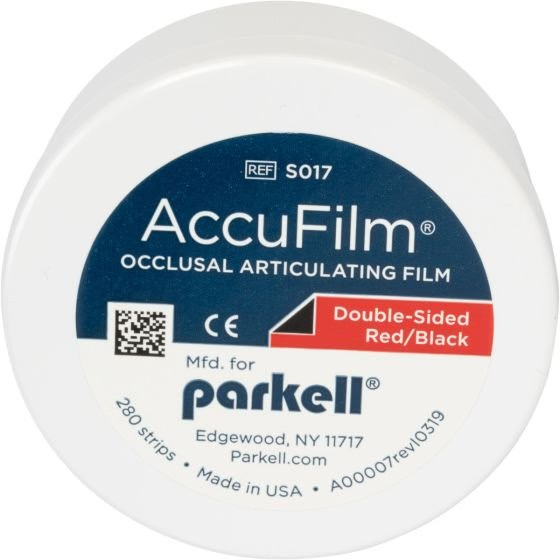
Our Pick: ACCU FILM 11 DS
Ultra-thin, double sided black and red articulating film designed to produce sharp, reliable occlusal marks in clinical and austere conditions. Moisture resistant and tear resistant for repeatable checks.
Mistakes to Avoid
Overloading the bite. Asking patients to clench hard can flatten the film and create broad smears that look like high contacts everywhere. Use light tapping first, then have the patient grind gently left and right only if you need to confirm excursive interferences.
Skipping moisture control. If saliva pools on occlusal surfaces, pigments can feather or fail to transfer. Quickly blot with gauze or a cotton roll. Even a brief dry field improves mark clarity in non-dental environments.
Reusing contaminated film. Single-use sheets reduce cross contamination risk and maintain mark fidelity. Handle with forceps when possible, keep the sheet flat, and discard after one patient according to OSHA and local policy.
Used properly, articulating film is small in cost and large in impact. It shortens assessments, explains pain that medication alone cannot fix, and improves the success of provisional care. Choose a thin, high-contrast, moisture-stable film, train the team on light-tap technique, and stock it where responders can reach it fast. Your patients will feel the difference, and your operation will gain back valuable time.


