



Severe external bleeding can kill in minutes, not hours, yet many agencies discover after their first major incident that their trauma kits are one-and-done. The initial pack gets used, then sits half empty while procurement wrestles with part numbers and backorders. A refill kit is not an afterthought. It is the sustainment plan that keeps training aligned with reality, ensures the next responder grabs a complete, familiar set of tools, and turns a single purchase into a reliable system of care.
The Bigger Picture
Refill kits are the bridge between your clinical protocols and operational tempo. They translate what you teach on the training ground into repeatable capability shift after shift. The best refill solution does three things. First, it protects your algorithm. TCCC emphasizes rapid hemorrhage control, airway protection, and hypothermia prevention in a clear sequence. If your resupply does not preserve that sequence, responders will waste time searching while fine motor skills degrade under stress.
Second, an effective refill approach respects your environment. Patrol officers have different carriage than a rural rescue team. Heat, cold, moisture, dust, and vibration accelerate product degradation and packaging failures. Refill items must be packaged appropriately and sized for your bags, chest rigs, or vehicle kits so crews do not strip packaging just to make it fit.
Third, it makes logistics boring in a good way. Standardized SKUs, color-coded modules, and clear counts allow anyone to restock from a shelf list or QR-based checklist. That reduces downtime, audit pain, and the chance that your next patient meets an empty tourniquet pouch or a missing hemostatic dressing. In short, a refill kit is a design decision about reliability, not a collection of parts.
How to Choose the Right Refill Kit
Start with mission, then map to the MARCH sequence, then confirm compatibility with your bags and training. Use the four criteria below to compare options and avoid surprises after purchase.
Mission profile and expected injuries
Define who will carry the kit and what they are likely to face. Patrol and campus security primarily need bleeding control and basic airway support for one to two patients. SWAT or rural SAR may face penetrating trauma plus prolonged evacuation. For patrol, prioritize high-quality windlass tourniquets, pressure bandages, hemostatic gauze, gloves, and chest seals. For teams expecting multiple casualties, scale counts and add redundant tourniquets, additional occlusive seals, hypothermia wraps, and IV or IO supplies only if within scope and training. The refill should specify patient capacity, for example single casualty versus two to four casualties, to align with your response model.
Standards alignment and component quality
Verify that contents support TCCC MARCH interventions. Look for CoTCCC-recommended tourniquets, vented chest seals that perform in the presence of blood and hair, hemostatic gauze with robust evidence and clear instructions, and thermal management items that work when wet. Packaging should be vacuum-sealed or otherwise ruggedized. If the kit claims Stop the Bleed compatibility, confirm it includes a tourniquet, pressure bandage, gauze, gloves, and instructions that match your training. Choose brand-name critical devices where evidence matters, then economize on consumables like tape or gloves without compromising safety.
Modularity, color coding, and layout fit
Refill kits that arrive as color-coded pouches mapped to MARCH reduce cognitive load in chaos. They also drop straight into most assault packs and vehicle bags. Check dimensions against your bag compartments. If you use a specific backpack or panel, make sure the refill uses flat packs and elastic bundles instead of bulky boxes. Modular refills let you replace only what was used, which lowers cost and keeps inventory organized. Clear outer labels, for example Bleeding, Airway, Chest, Hypothermia, allow anyone on the team to find the right pouch in low light or with gloves on.
Sustainment, shelf life, and documentation
Refill kits should ship with an itemized contents card, lot numbers, and expiration dates that are easy to inventory. Hemostatic agents, chest seals, and certain dressings commonly carry 3 to 5 year shelf lives, while gloves may age sooner in heat. Choose vendors that standardize SKUs so your purchasing team can reorder by module. Ask for a restock checklist that matches your bag layout, and plan a 90 day visual check with a 12 month hands-on audit. If the vendor offers a limited lifetime warranty on the bag or modules, confirm what is covered and how to process replacements.
What the Standards Say
TCCC guidelines drive the priorities in tactical trauma care. They emphasize early tourniquet use for life-threatening extremity hemorrhage, effective wound packing with hemostatic gauze, chest seal application for suspected torso penetration, airway positioning and adjuncts within scope, and hypothermia prevention immediately after bleeding control. A refill kit that supports this sequence helps responders execute under stress.
OSHA 1910.151 requires employers to provide adequate first aid supplies that are readily available based on hazards and response time. For high-risk or delayed-response settings, that means augmenting general first aid with trauma-specific modules like bleeding control and chest seals. NFPA 3000, which addresses Active Shooter and Hostile Event Response programs, calls for integrated medical response and accessible hemorrhage control supplies staged with law enforcement. The American Heart Association First Aid science and education materials reinforce rapid bleeding control and early recognition of life threats for lay and professional rescuers.
Operational takeaway: select refills that let you meet TCCC care priorities, demonstrate OSHA readiness for your hazards, and support NFPA 3000 concepts for coordinated response. Keep documentation of contents, expirations, and training alignment for inspections and after-action reviews.
Build your refill plan around how your people are trained, not the other way around. Standardize contents across units, label modules to mirror your teaching flow, and keep a laminated contents card in the lid of every bag. Pair that with a QR link to a digital checklist so any officer can restock from supply without hunting part numbers. This improves audit readiness and preserves muscle memory when seconds count.
A Recommended Option
For teams that want a compact, field-ready platform with a professionally curated trauma fill, a small assault-style backpack paired with a bleeding and trauma module is a pragmatic choice. The Lightning X package available at MyAED includes a purpose-built backpack with reinforced construction and thoughtful organization, matched to a refill set selected by experienced EMS providers. The color-coded modules and clear layout support rapid identification and deployment of tools in line with bleeding-control priorities.
Because the kit ships fully stocked, agencies can deploy quickly, then sustain with modular refills rather than replacing entire bags. This approach suits patrol supervisors, campus response teams, and rescue squads that need a mobile station capable of handling the first minutes of care while awaiting transport or ALS intercept. Validate counts against your patient capacity goals, then standardize across vehicles so crews encounter the same layout every time.
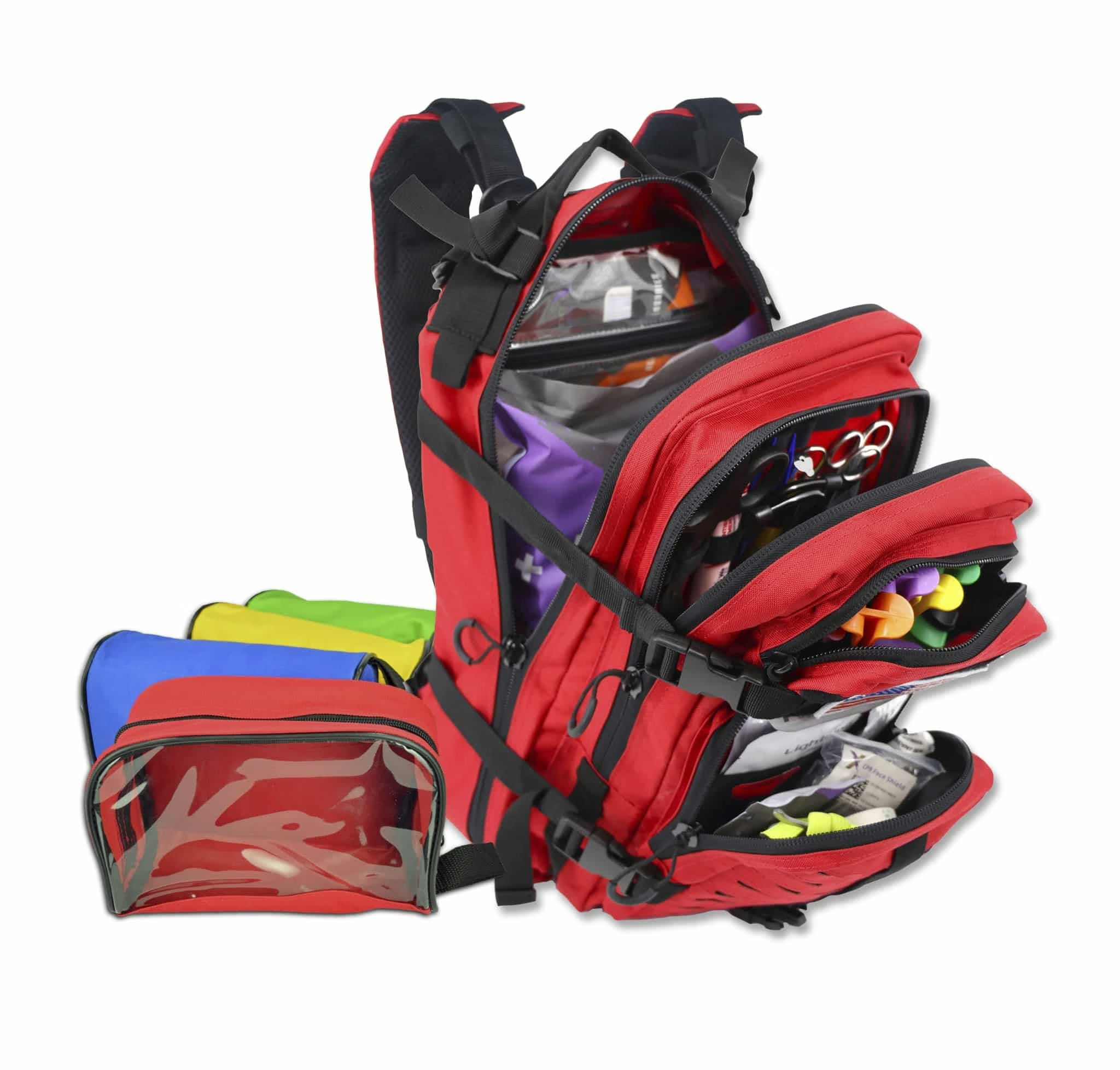
Small Tactical Assault Backpack w/ Trauma & Bleeding Medic Fill Kit w/ Removable Colored
Compact tactical backpack paired with a curated trauma and bleeding refill set. Heavy-duty build, organized compartments, and color-coded modules designed for rapid access and repeatable care.
Mistakes to Avoid
Buying parts that do not fit your bag layout. Bulky outer boxes and odd-sized pouches get discarded, which exposes sterile packaging and accelerates damage. Match refill dimensions to your backpack compartments, panels, or vehicle drawers before purchase.
Mixing training models and field contents. If your in-service teaches a specific windlass tourniquet or packing method with a named hemostatic gauze, stock the same in your refills. Device mismatch erodes confidence and slows care at the worst time.
Leaving sustainment to a single champion. When only one person knows what to order, shelves run empty when that person is off. Use a contents card, standardized SKUs, and a QR-linked checklist so anyone can restock accurately after an incident or drill.
Refill kits turn a one-time purchase into a durable capability. Choose modules that reinforce TCCC priorities, fit your gear, and simplify logistics. Then document, standardize, and rehearse the restock process until it is as routine as checking your radio. With a sound sustainment plan, the next critical call meets a complete kit and a confident team.


