



Most responders believe they can touch every critical item in their trauma bag within a minute. Reality is different. In drills, a large share of delays come from search time inside the bag, not from the intervention itself. The fix is rarely a bigger bag. It is a repeatable load plan, clear visual cues, and modular organization that survives motion, low light, and stress. This guide distills field-proven practices to help you design a system that gets hands on the right tool, the first time.
The Bigger Picture
Equipment bag organization is not about tidiness. It is a human factors problem. Under stress, fine motor control, working memory, and visual scanning degrade. Teams compensate by externalizing memory into the bag layout: consistent locations, color coding, tactile anchors, and labels that are readable at a glance. When your layout is standardized, muscle memory builds across the crew, backfills staffing changes, and lowers cognitive load during rare but high consequence events.
Good organization also preserves clinical priorities. Many agencies mirror the MARCH or ABC sequence in their bag so critical bleeding control and airway tools live in the first reachable spots. Clear windows and color bands reduce open and search cycles. Modular pouches let you stage interventions at the patient side without dragging the whole pack into a contaminated zone. Finally, a standardized system shortens post-call reset time because inventory is visual and quick.
How to Choose the Right Equipment Bags
Start by defining the job the bag must do, then select features that make the job faster, safer, and easier to keep ready. Use these four criteria to drive your decision and your load plan.
Mission profile and load map
Clarify where and how the bag will be used. BLS first response, ALS transport, wilderness SAR, tactical warm zone, or workplace industrial first aid each drive different priority items. Map the first 60 seconds of care and list the five tools you must reach without thought. Place those in the bag’s most prominent, fastest opening compartments. Define weight and volume limits so the bag stays carryable over the longest expected approach. Plan access when gloved, kneeling, or working in tight spaces like stairwells or vehicles.
Access speed and visibility
Choose a layout that opens wide, stays open, and exposes contents in a single view. Clamshell designs and clear-window pouches minimize search time compared to deep, top-loading cavities. Add large, high-contrast labels that are readable in low light. Use color coding to encode categories, for example red for bleeding, blue for airway, green for meds or monitoring. Select zippers with glove-friendly pulls and compartments that are reachable without flipping the bag in cramped areas.
Modularity, standardization, and scalability
Pick a system that scales across crews and vehicles. Modular pouches let you mirror the same arrangement in every kit, so any provider can work out of any bag. Rip-away or removable modules support hot zone staging, quick resupply, and contamination control. Use uniform pouch sizes so they pack tightly and reassemble the same way every time. Standardize the color and label scheme across the agency to reinforce muscle memory and simplify training.
Durability and decontamination
Materials must tolerate abrasion, UV, moisture, and frequent cleaning. Look for heavy denier nylon or TPU-coated fabrics, reinforced seams, and robust zippers. Smooth interiors and clear windows should wipe clean without trapping fluids. Drainage grommets help after rain or washdown. Consider reflective accents for night operations and attachment points for ID tags, triage ribbons, or chem lights. Choose pouches with interior elastic and pockets that keep items fixed during transport.
What the Standards Say
While no single standard dictates bag layout, several guidelines inform what you stock and how you make it accessible.
Tactical Combat Casualty Care, through the Committee on TCCC, prioritizes the MARCH sequence. Many tactical and hybrid teams mirror this in their packs, placing hemorrhage control in the fastest access zone, followed by airway and respiration aids. Modular, tear-away pouches support point-of-wounding care and rapid movement between zones.
The American Heart Association emphasizes timely defibrillation and airway management for cardiac arrest. Code cart principles carry over to field kits: clear labeling, consistent locations, and routine checks to reduce time to drug, airway, or defib pads during high stress events.
In workplaces, OSHA 1910.151 requires readily available medical supplies. Most employers follow ANSI/ISEA Z308.1 for minimum first aid kit contents. For mobile teams, align your bag to the hazards identified in your job hazard analysis, then organize those supplies so the most likely, most severe injuries are front loaded.
Fire and EMS agencies also look to NFPA guidance for operational readiness. While NFPA 1999 focuses on protective ensembles, its infection control principles support choosing wipeable surfaces and decontamination friendly materials for bags and pouches. Agencies adopting NFPA 3000 programs for hostile event response often standardize IFAKs and team bags with color coded, clearly labeled modules to improve cross-agency interoperability.
Layout is a clinical protocol in physical form. If your medical algorithm changes, your bag should change the same week. Update the load map, re-label, and drill until providers can retrieve the new priority items with eyes closed and gloves on.
A Recommended Option
For teams that want fast visual identification and a modular system that fits popular trauma bags, color coded organizer pouches are a practical upgrade. They externalize categories with color and clear windows, they keep small items from migrating, and they make post-call restock faster because inventory is visible at a glance.
The Lightning X Premium Color Coded Organizer Pouches slot neatly into many medical packs and trauma kits. Each uniform pouch has a clear window for instant ID and interior elastic to anchor supplies, which cuts search and setup time. Heavy duty nylon and reinforced zippers tolerate daily field use and routine wipe downs. Use a standard color map across your organization, for example red for bleeding, blue for airway, yellow for meds, and black for tools, then label each window with the exact contents you expect to find.
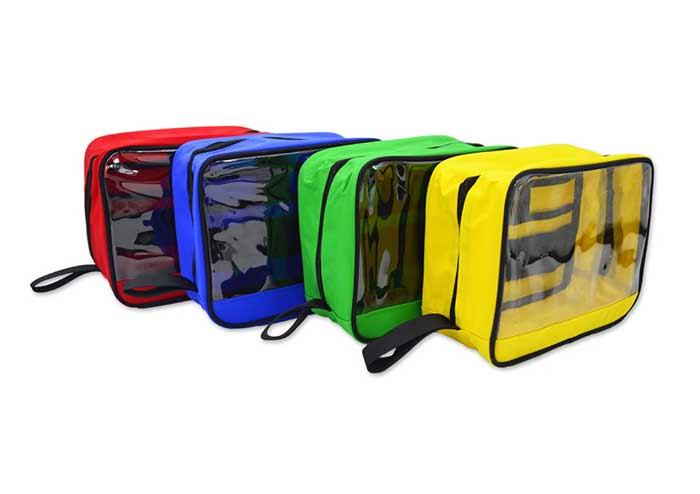
Premium Color Coded Organizer Pouches
Mistakes to Avoid
Mixing categories in one pouch. When bleeding control, airway, and meds share space, search time and cross contamination risk climb. Adopt one function per pouch, color code it, and label the window with a contents list and expiration highlights.
Overpacking to the point of immobility. A 35 liter bag that weighs 35 pounds will not make it up six flights quickly. Cap weight based on your longest carry, duplicate only the items you will plausibly use twice in one patient, and move rarely used gear to second line kits.
No reset process. After calls, gear migrates. Without a checklist, pouches become junk drawers. Use a 3 part reset: visual inventory through clear windows, hand count of controlled or sterile items, then restock and sign off. Spot check weekly and after any protocol change.
A reliable bag is a system, not a container. Define the first minute of care, mirror that in your layout, and make categories obvious with color and labels. Choose durable, decon friendly materials, standardize across crews, and practice retrieval until it is automatic. Modular pouches can help you get there, but the real performance comes from a clear load plan and the discipline to keep it current.


