



K-12 Schools
School AED Laws in Kentucky, Georgia, North Carolina, Michigan and Minnesota
All five states have new school laws on sudden cardiac arrest, and each one covers AEDs. Kentucky requires a portable AED in every school building. Georgia required at least one working AED in every public K-12 school by July 1, 2025. North Carolina requires a cardiac emergency response plan from the 2026-2027 school year and State Board rules that put at least one AED in each school. Michigan requires a cardiac emergency response plan from the 2025-2026 school year (the statute ties compliance to state funding), and Minnesota from the 2026-2027 school year; both plans must provide for AEDs on school grounds.
Last reviewed October 7, 2026. Each statement is linked to its source below.
Kentucky
KRS 158.162, as amended by House Bill 169 (2024 Ky. Acts ch. 208, signed April 18, 2024), requires each local board of education to have every school:
- ✓Keep a portable AED in a public, readily accessible, well-marked location in every school building and, as funds become available, at school-sanctioned athletic practices and competitions.
- ✓Include in the school emergency plan a written cardiac emergency response plan and a facility diagram showing the location of each AED.
- ✓Rehearse the cardiac emergency response plan by simulation before each athletic season, with athletic trainers, school nurses, athletic directors and coaches.
- ✓Train at least three employees in each school and all interscholastic athletic coaches to use an AED; coaches must keep a current CPR certification.
- ✓Report to the Kentucky Department of Education by November 1 each school year on the number and location of AEDs and the staff trained to use them.
Georgia
O.C.G.A. § 20-2-775, as amended by House Bill 874 (2024), requires that no later than July 1, 2025, each public K-12 school have at least one functional AED on site at all times, easily accessible during school hours and school-related functions such as practices and games. Each school must also:
- ✓Have its internal response team and other expected AED users complete American Heart Association or American Red Cross CPR and AED training, or an equivalent nationally recognized course.
- ✓Notify the local emergency medical services system of each AED and its location before the AED is placed in use.
- ✓Maintain and test each AED according to the manufacturer's operational guidelines.
- ✓Involve a licensed physician or other person authorized by the Georgia Composite Medical Board in the AED program.
- ✓Adopt a written emergency action plan for cardiac emergencies and an internal response team of at least five staff members.
- ✓Beginning in the 2025-2026 school year, run at least two emergency action plan drills each school year, at least one per semester.
North Carolina
Section 7.38 of Session Law 2026-41 (the 2026 budget act, approved July 7, 2026) created G.S. 115C-375.6, which applies beginning with the 2026-2027 school year. Each public school unit must adopt a cardiac emergency response plan, reviewed and updated every year, that at least:
- ✓Establishes a cardiac emergency response team and describes how it is activated.
- ✓Identifies the staff who receive annual CPR and AED training, including at least school nurses and staff who supervise students in physical activity.
- ✓Plans annual practice drills for the response team and integrates local emergency service providers.
The State Board of Education must adopt rules that provide for at least one AED in each school, placed under American Heart Association or similar guidelines, marked with signage, not locked or behind a key, and able to reach a victim within three minutes. The act also sets aside $4,000,000 for AED purchase and installation or cardiac emergency training, to ensure at least one AED is installed in each public school.
Michigan
MCL 29.19b (2024 Public Act 36) requires public and nonpublic schools, beginning with the 2025-2026 school year, to develop a cardiac emergency response plan based on American Heart Association or other nationally recognized guidelines. The plan must provide for:
- ✓A cardiac emergency response team and how it is activated.
- ✓AEDs in accessible locations throughout the campus and athletic facilities, easily retrievable, not locked against public access and marked with signage.
- ✓Routine AED maintenance, ongoing staff training in CPR, first aid and AED use, and annual practice simulations.
- ✓Integration with local emergency response agencies and a review of the plan at least every three years.
The statute says schools are not required to comply unless the legislature has appropriated sufficient funds to implement it.
Minnesota
Minn. Stat. § 121A.241 requires each school district and charter school, beginning in the 2026-2027 school year, to develop a cardiac emergency response plan consistent with the state model plan. The plan must at least:
- ✓Establish a school cardiac emergency response team and how it is activated.
- ✓Provide for placement of AEDs on school grounds and for routine AED maintenance.
- ✓Be shared on school grounds and coordinated with local emergency medical services.
- ✓Require annual drills for staff and students, with a yearly review by the school board.
- ✓Cover school-sponsored activities, including athletic events on or off school grounds.
AEDs for Schools
These laws do not name a brand or model. Many schools choose an AED that also works for younger children with child pads or a child setting; check each product page for its pediatric option. Each card shows the current price, the same price you pay in the cart.

Philips HeartStart OnSite AED
Automated External Defibrillator Designed for the ordinary person in the extraordinary moment, Phi...

ZOLL AED 3
The ZOLL AED 3 defibrillator combines Real CPR Help technology with a full-color touchscreen, Wi-Fi...

HeartSine Samaritan PAD 350P & 360P
The semi-automatic HeartSine samaritan PAD 350P AED and fully automatic HeartSine samaritan PAD 360P...

Cardiac Science Powerheart G5 AED
The Cardiac Science Powerheart G5 AED features Intellisense CPR feedback technology, full energy dis...
Child pads, signs and a trainer for the drills these laws require:
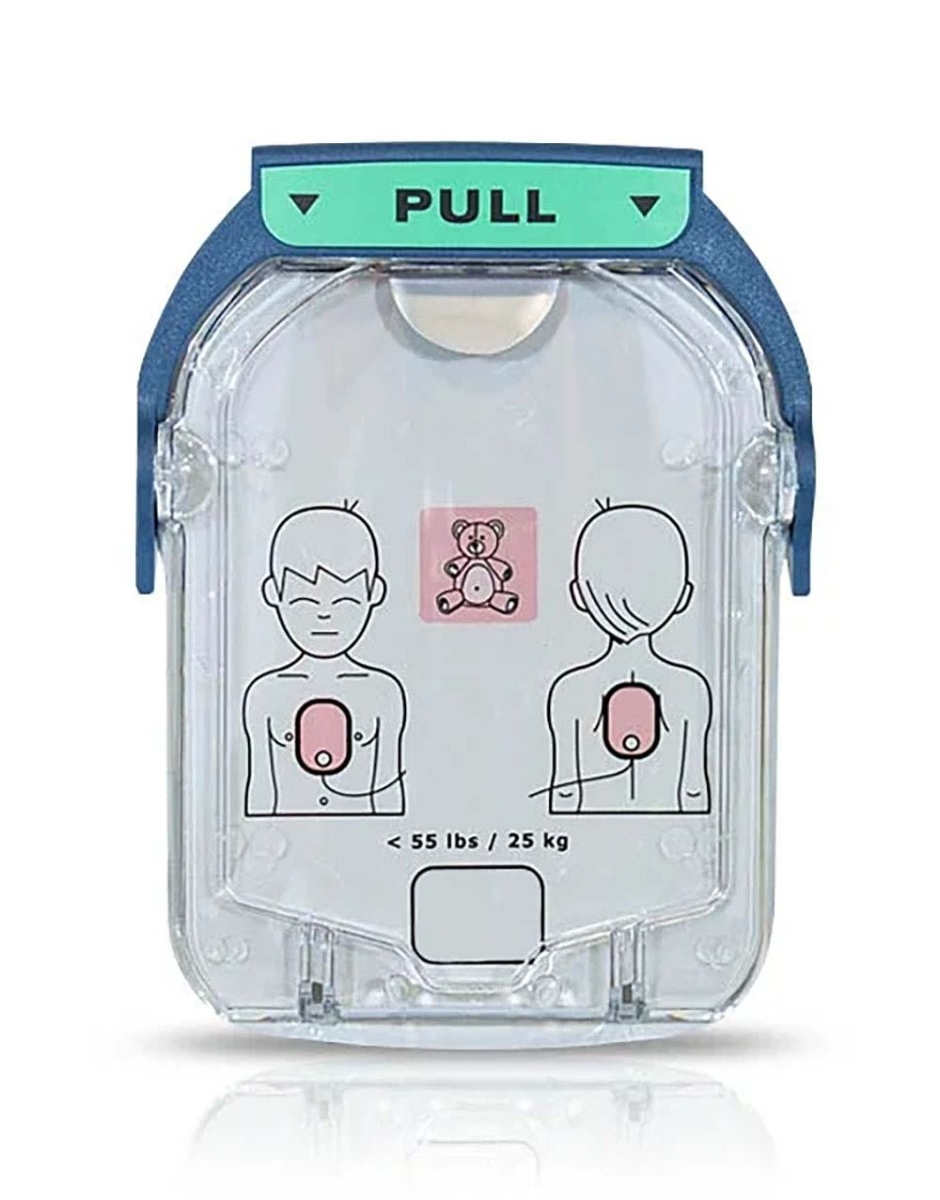
Philips HeartStart OnSite Infant/Child SMART Pads Cartridge
The Philips HeartStart OnSite Infant/Child SMART Pads Cartridge (M5072A) enables the OnSite AED to s...

HeartSine Samaritan Pediatric-Pak
HeartSine Samaritan Pediatric-Pak (Pink) is for patients 1-8 years old. The HeartSine Samaritan Ped...

Philips HeartStart AED Signage Bundle
The Philips AED Signage Bundle enhances the visibility and accessibility of Automated External Defib...

HeartSine Samaritan PAD Trainer
The easy-to-use HeartSine samaritan PAD Trainer with remote control guides users through simulated a...
Equipping a whole district? See our school AED packages or request a quote.
Frequently Asked Questions
Which of these states require an AED in every school?
Kentucky requires a portable AED in every school building. Georgia requires at least one functional AED on site at every public K-12 school. North Carolina requires State Board rules that provide for at least one AED in each school. Michigan and Minnesota require cardiac emergency response plans that provide for AEDs on school grounds.
What is a cardiac emergency response plan?
A written plan that sets out what school staff do when someone has a sudden cardiac arrest: who is on the response team, how the team is activated, where the AEDs are, how the plan is practiced and how local emergency services are brought in. Each state sets its own minimum contents.
Do schools have to run cardiac emergency drills?
All five laws call for practice. Kentucky requires a rehearsal by simulation before each athletic season. Georgia requires at least two drills each school year starting in 2025-2026. North Carolina and Michigan require annual practice drills or simulations, and Minnesota requires annual drills for staff and students.
Who has to be trained to use the AED?
Kentucky requires at least three trained employees in each school plus all interscholastic coaches. Georgia requires training for the internal response team and other expected AED users. North Carolina requires annual CPR and AED training for the staff named in the plan, including school nurses and staff who supervise physical activity. Michigan requires CPR, first aid and AED training for the staff included in the plan.
Is there state money for school AEDs?
North Carolina set aside $4,000,000 for the 2026-2027 fiscal year and first gives $2,000 for each public school without an AED (pro rata if funds run short). Kentucky has a school AED fund for needs-based grants. Georgia law provides funds to school systems subject to appropriations. Michigan schools are not required to comply with that state's plan law unless the legislature appropriates sufficient funds.
Sources
- Kentucky: 2024 Ky. Acts ch. 208 (House Bill 169), amending KRS 158.162 and KRS 158.1622
- Georgia: House Bill 874 (2024), amending O.C.G.A. § 20-2-775
- North Carolina: Session Law 2026-41, Section 7.38 (G.S. 115C-375.6)
- North Carolina: Session Law 2026-61, Section 3.10 (liability wording in G.S. 115C-375.6(e))
- Michigan: MCL 29.19b (2024 Public Act 36)
- Minnesota: Minn. Stat. § 121A.241
This page summarizes state law for general information and is not legal advice. Laws, regulations and local rules change. Check with your state agency, local EMS agency or attorney before relying on it.
Related: School AED Packages · AED Requirements by State