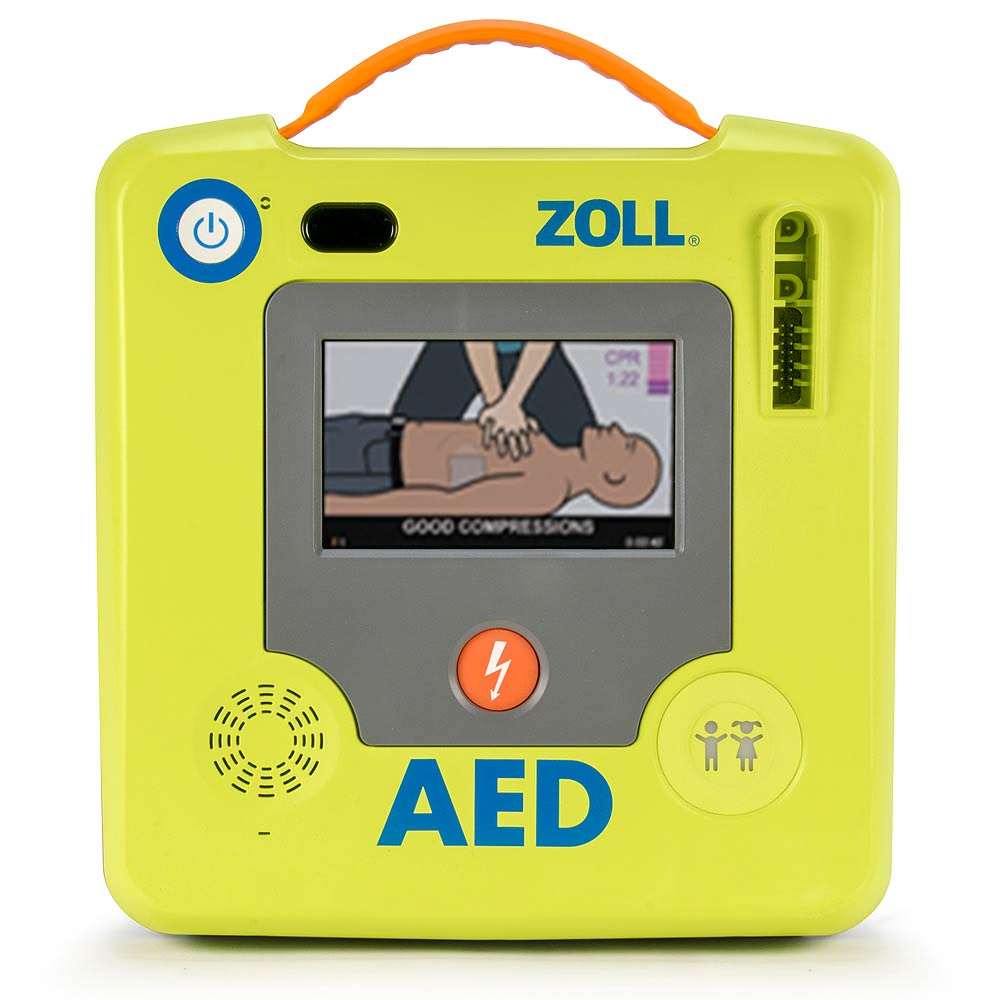
In senior living and long-term care environments, cardiac emergencies are not rare events, they are expected risks. Faster access to the right tools and a practiced response can be the difference between life and death. This article explains why rapid cardiac response matters in these settings and how to build a program that saves precious minutes and lives.
Key Takeaways
- Time to first shock is the single most important survival factor in sudden cardiac arrest.
- Senior living communities benefit from strategically placed AEDs, trained staff, and clear response roles.
- Routine drills, device readiness checks, and data reviews keep programs effective and compliant.
- State laws and accreditation standards increasingly expect AED access and documented training.
The Cardiac Risk Profile in Senior Living Communities
Sudden cardiac arrest is a leading cause of unexpected death, and risk climbs with age due to heart disease, arrhythmias, and multiple chronic conditions. Senior living communities, whether independent, assisted, or skilled nursing, concentrate individuals with higher baseline cardiac risk. That means cardiac events will occur, and when they do, outcomes hinge on seconds.
Why risk is higher with age
- Prevalent conditions: Coronary artery disease, heart failure, atrial fibrillation, and electrolyte imbalances raise the chance of lethal arrhythmias.
- Medication effects: Polypharmacy, including diuretics, antiarrhythmics, and psychotropics, can prolong QT intervals or blunt compensatory responses.
- Physiologic reserve: Frailty and comorbidities decrease tolerance to hypoxia and hypotension during cardiac arrest.
These factors cluster in senior living, which increases the likelihood of not only cardiac arrest but also pre-arrest emergencies such as syncope, bradycardia, and chest pain that can escalate quickly. Staff are often the first to witness these events, and their ability to activate a rapid response is critical.
In the United States, more than 350,000 out-of-hospital cardiac arrests occur annually. Incidence is highest among adults older than 65, and overall survival remains near 10 percent without rapid intervention. Sources: American Heart Association and related epidemiologic reports.
Environmental considerations
- Large campuses: Long hallways, locked units, and elevators add travel time for responders.
- Variable supervision: Independent living areas may have fewer staff nearby after hours.
- Visitor traffic: Family visits and contractors increase the number of potential bystanders who may need guidance.
These environmental realities underscore the need for thoughtful device placement, clear wayfinding, and a simple response algorithm that non-clinical staff can follow. Faster tools, especially defibrillators that guide rescuers with voice prompts, reduce cognitive load under stress and make a lifesaving difference.
How Faster Response Shapes Survival: The Case for Rapid Tools
In cardiac arrest, the heart’s electrical system fails and effective circulation stops. Brain injury begins within minutes. The most common initial rhythm in adult out-of-hospital cardiac arrest is ventricular fibrillation or pulseless ventricular tachycardia, rhythms that can be reversed with a timely shock. The link between time and survival is direct, which is why faster cardiac response tools are essential where at-risk residents live.
Time is the critical variable
For every minute defibrillation is delayed, survival from ventricular fibrillation cardiac arrest decreases by an estimated 7 to 10 percent. When defibrillation occurs within 3 minutes, survival can exceed 50 to 70 percent in some settings. Source: American Heart Association guidelines and public access defibrillation studies.
These figures explain why tools that cut out steps, shorten search time, and guide immediate action are high-value investments. A hallway AED cabinet ten doors away is far less effective than one placed within a two-minute roundtrip of any resident room. The same logic applies to response roles and drills. When staff know exactly who calls 911, who brings the AED, and who starts compressions, the clock works in your favor.
Bridging the gap before EMS arrives
- Typical EMS response times: Even in well-served areas, 6 to 10 minutes is common, which is beyond the ideal shock window.
- Onsite capabilities: An Automated external defibrillator with clear prompts, along with barrier devices and gloves, allows immediate defibrillation and high-quality compressions.
- Minimizing no-flow time: Quick pad placement and uninterrupted compressions are more impactful than advanced interventions that come later.
Faster response is not only about speed to shock, it is also about quality of Cardiopulmonary resuscitation from the first minute. Tools that coach rate and depth, such as AEDs with CPR feedback, improve consistency. The goal is to establish a repeatable, facility-wide rhythm of recognition, activation, CPR, and defibrillation that happens instinctively.
Guidelines emphasize the Chain of Survival, which includes early recognition and activation, early CPR, rapid defibrillation, advanced care, and post-arrest care. Each link depends on shaving seconds wherever possible. Source: AHA Chain of Survival framework.
Essential Cardiac Response Tools for Senior Living Facilities
Speed and simplicity drive equipment selection. Senior living teams benefit from devices that are intuitive, reliable, and ready at a moment’s notice. The following tools and features help non-clinical and clinical staff perform under pressure.
AED selection features that matter
- Public access defibrillation design: Look for bright prompts, pictograms, and metronome guidance that simplify use for any trained rescuer.
- CPR feedback: Real-time rate and depth coaching helps maintain 100 to 120 compressions per minute with adequate depth and recoil.
- Fully automatic or semi-automatic: Fully automatic models deliver a shock after analysis if needed, which can reduce delays. Semi-automatic devices require a button press, which some teams prefer for control.
- Bilingual prompts: Communities with diverse staff and residents benefit from on-device language toggles.
- Connectivity: Wi-Fi or cellular readiness monitoring alerts teams to low battery or expired pads, reducing surprise failures.
Placement and accessibility hardware
- Alarmed cabinets and wall signs: Cabinets protect devices and make location obvious. Audible alarms also prompt bystander assistance.
- Strategic placement: Aim for a two-minute retrieval standard. Map travel paths to resident rooms, dining areas, activity spaces, and courtyards.
- Portable response bags: Stock with adult pads, spare pads, razor, shears, towel, gloves, and barrier mask. Keep one with each AED cabinet.
Adjunct supplies that speed action
- First responder kits: Prepackaged pouches minimize fumbling for essentials like gloves, razor for chest hair, and wipes for pad adhesion.
- Oxygen and airways where permitted: If your scope of practice allows, supplemental oxygen and simple airways can support ventilation without delaying defibrillation.
- Stopwatch or timer: Some AEDs display time-in-arrest. If not, assign a timekeeper so intervals stay accurate.
Tools alone do not save lives, but they enable trained people to do the right things faster. Select devices that match the skill mix of your staff and that integrate easily into your emergency plan. Keep replacement consumables on hand so expired pads or depleted batteries never sideline your program.
Building a Rapid Response Program: Training, Drills, and Roles
Even the best equipment will underperform without a practiced team. Senior living communities can standardize a fast, calm response by defining roles, training regularly, and rehearsing in real locations on each shift.
Clarify roles before an emergency
- Lead rescuer: Starts compressions immediately and follows AED prompts upon arrival.
- Runner: Retrieves the nearest AED and response kit, then returns directly.
- Communicator: Calls 911, provides precise location details, and meets EMS at the entrance.
- Crowd control and documentation: Keeps hallways clear, notes times, and tracks interventions.
Training essentials
- BLS or lay rescuer courses: Ensure staff can recognize unresponsiveness, check breathing, and start compressions hard and fast at 100 to 120 per minute, about 2 inches deep for adults.
- AED proficiency: Practice pad placement, safety checks, and minimizing pauses for rhythm analysis.
- Scenario variety: Include events in dining rooms, resident apartments, and outdoor areas. Simulate locked doors and elevator delays so teams solve real problems in practice.
High-quality CPR with minimal interruptions, combined with shock delivery as soon as an AED is available, remains the cornerstone of adult cardiac arrest care. Frequent, brief refreshers sustain performance better than annual training alone. Source: Resuscitation training best practices derived from AHA guidance.
Standard operating sequence
- Recognize unresponsiveness and abnormal or absent breathing.
- Activate the emergency plan and call 911 immediately.
- Begin chest compressions and continue until the AED arrives.
- Power on the AED, apply pads, follow prompts, and clear for analysis and shock if advised.
- Resume compressions immediately after shock or no-shock prompt and rotate compressors every 2 minutes.
Measure what matters. Track time to AED arrival, time to first shock, and compression fraction during drills. Set a facility benchmark to deliver the first shock within three minutes from collapse in high-traffic areas, and within four minutes in harder-to-reach locations. Use results to refine device placement and role assignments.
Implementation, Compliance, and Maintenance Best Practices
Successful programs are built on three pillars, reliable equipment, a supportive regulatory framework, and disciplined maintenance. Senior living operators should design policies that satisfy state expectations, align with accreditation requirements, and protect residents and staff.
Know your regulatory landscape
- State AED laws: Most states encourage or require AED program elements like medical oversight, registration with local EMS, training, and post-event reporting. Requirements vary, so verify specific obligations for assisted living or skilled nursing in your jurisdiction.
- Good Samaritan protections: Many states extend civil liability protection to trained lay rescuers and entities that maintain AEDs per statute. Compliance with maintenance and training provisions is often a prerequisite.
- CMS and accreditation: The CMS Emergency Preparedness Rule requires participating facilities, including nursing homes, to maintain an all-hazards plan, conduct training and drills, and coordinate with local responders. While not prescriptive about AEDs, having accessible defibrillation and documented training supports readiness expectations.
AEDs are regulated medical devices in the United States. Facilities should maintain a documented AED program that includes physician or medical director oversight where required, staff training, device maintenance, and coordination with EMS. Check state statutes and local EMS policies for specifics.
Maintenance that guarantees readiness
- Inspection cadence: Perform quick visual checks weekly or monthly, depending on policy. Verify readiness indicators, accessory presence, and cabinet condition. Log each inspection.
- Consumables lifecycle: Most adult pads expire every 2 to 4 years, and batteries typically last 2 to 5 years. Maintain a replacement calendar and keep spares onsite.
- Self-tests and connectivity: Enable scheduled self-tests. For connected AEDs, monitor dashboards or alerts so issues are resolved before an emergency.
- Post-event recovery: After any use, replace pads, check batteries, clean the device, and download event data for quality review.
Documentation and quality improvement
- Written protocol: Keep a concise response algorithm at each AED station.
- Training records: Track who is trained, expiration dates, and refresher schedules. Aim for universal coverage among staff with resident contact.
- Drill evaluations: Debrief after each exercise, record times, and implement targeted changes to device placement or staffing.
Well-documented programs do more than check a box. They make performance visible, help close gaps, and demonstrate due diligence to residents, families, and surveyors. When policies align with day-to-day practice, speed becomes your default.
Designing for Speed: Placement, Wayfinding, and Human Factors
Speed is engineered, not improvised. Senior living campuses can embed faster response into their physical layout and culture with a few pragmatic design choices that reduce friction in high-stress moments.
Map and measure travel time
- Two-minute circles: Draw floor plans and create two-minute retrieval zones. Any room outside that radius needs an additional AED or a repositioned cabinet.
- Choke points: Account for elevators, secure units, and exterior doors. Provide keypad codes on responder badges and ensure master keys are reachable at all times.
- Night and weekend coverage: Adjust device placement and staffing for off-peak hours when fewer people are onsite.
Make devices impossible to miss
- High-visibility signage: Use standardized AED symbols and arrows visible from both directions of a corridor.
- Consistent cabinet height and location: Place at eye or chest level near main intersections and outside high-occupancy spaces like dining rooms.
- Lighting and access: Ensure cabinets are well lit and unobstructed. Avoid locked enclosures unless required by policy, and if locked, use breakaway mechanisms.
Reduce cognitive load under stress
- Simple instructions: Post a three-step action card at each cabinet. Include the facility address and cross streets for 911 calls.
- Uniform kits: Stock all response bags identically so any rescuer knows where to reach for razors, shears, or barrier masks.
- Noise cues: Choose alarmed cabinets so opening them alerts nearby staff and signals an emergency is in progress.
Human factors research shows that standardization, clear visual cues, and minimizing choices speed action and reduce errors during emergencies. Design your environment so the right behavior is the easiest behavior.
These design choices work in tandem with training to remove seconds at each step. Over time, they also build resident and staff confidence that help is always close at hand.
After the Save: Post-Event Care, Data, and Family Communication
Rapid response does not end with shock delivery. What happens in the minutes and days after an arrest influences outcomes, staff resilience, and community trust. Plan ahead for the post-event phase so teams can focus on care rather than logistics.
Immediate post-event priorities
- Handover to EMS: Provide a concise report, times of collapse and first shock, number of shocks, and any return of spontaneous circulation. Hand over the AED or event summary if available.
- Device turnover: Replace pads and check battery status. Restore the cabinet and kit to ready condition within 24 hours.
- Staff decompression: Offer a brief huddle to review what went well and what to improve. Provide access to employee assistance resources as needed.
Data for continuous improvement
- Download and review: Many AEDs store ECG and event timelines. Use this data to refine training and placement.
- Report per law: Some jurisdictions ask for AED use reports to EMS or public health. Keep a simple form ready.
- Update metrics: Log time to AED arrival, time to first shock, and compression fraction. Compare to targets and track trends.
Transparent, compassionate communication
- Family updates: Ensure a designated leader communicates facts promptly and compassionately, including the actions taken by staff.
- Resident privacy: Follow HIPAA and facility policies when informing other residents or community members about an incident.
- Community learning: Share de-identified lessons internally to reinforce the value of preparedness and practice.
Post-event reviews transform a single rescue into a learning opportunity that strengthens the entire Chain of Survival for future residents and visitors.
When teams know that leadership supports debriefing, data review, and rapid restocking, they are more likely to act decisively the next time. That culture of readiness is the real return on investment.
Final Thoughts
Senior living communities face a predictable burden of cardiac emergencies, and time is the governing variable. Faster tools, smart placement, and practiced teams can turn minutes into lives saved.
Ready to strengthen your program today? Explore MyAED’s curated selection of AEDs, alarmed cabinets, responder kits, replacement pads and batteries, and training supplies. Our team can help you choose the right devices, map optimal placement, and set up a maintenance plan that keeps your community always ready.