


AED Requirements in North Carolina
From the 2026-2027 school year, North Carolina requires each public school unit to adopt a cardiac emergency response plan, and State Board of Education rules must provide for at least one AED in each school (G.S. 115C-375.6).
North Carolina AED Law Overview
From the 2026-2027 school year, North Carolina requires each public school unit to adopt a cardiac emergency response plan, and State Board of Education rules must provide for at least one AED in each school (G.S. 115C-375.6).
Every year, over 350,000 cardiac arrests occur outside of hospitals in the United States. For every minute that passes without defibrillation, the chance of survival drops by 7-10%. Having an AED on-site and trained staff ready to use it can mean the difference between life and death.
Whether North Carolina mandates AED placement for your organization or not, the investment in an AED program protects your employees, customers, and community — and can significantly reduce liability exposure.
Specific Requirements
- Public school units: a cardiac emergency response plan, reviewed and updated every year
- Annual CPR and AED training for the staff named in the plan, including school nurses and staff who supervise physical activity
- Annual practice drills for the cardiac emergency response team
- At least one AED in each school, placed and marked under State Board of Education rules
Sources
These summaries were last checked against the official sources above in October 2026. This page is general information, not legal advice. Other state or local rules may also apply; check the current law or ask an attorney about your organization.
Who Needs an AED in North Carolina?
Offices & Workplaces
Corporate offices, coworking spaces, and business parks
The American Heart Association reports that 10,000 cardiac arrests occur in the workplace each year. Having an AED can increase survival rates by up to 70%.
Schools & Universities
K-12 schools, colleges, and educational institutions
Student athletes and staff are at risk of sudden cardiac arrest. Many states now mandate AEDs in schools.
Gyms & Fitness Centers
Health clubs, yoga studios, CrossFit boxes, and recreation centers
Intense physical activity can trigger cardiac events. Most states require AEDs in fitness facilities.
Churches & Places of Worship
Churches, synagogues, mosques, and community halls
Large gatherings of all ages, often with elderly congregants, make AEDs essential for community safety.
Restaurants & Hotels
Restaurants, hotels, resorts, and hospitality venues
High foot traffic and diverse demographics make AEDs critical for guest safety and liability protection.
Construction & Industrial Sites
Construction sites, warehouses, manufacturing plants
Physical labor, heat stress, and remote locations make rapid cardiac response critical.
Sports Facilities
Stadiums, arenas, sports complexes, and athletic fields
Athletes of all ages face cardiac risks during high-intensity activity.
Medical & Dental Offices
Doctor offices, dental practices, outpatient clinics
Even in medical settings, an AED provides immediate response before advanced care arrives.
North Carolina AED Compliance Checklist
Recommended AEDs for North Carolina Compliance

Philips HeartStart OnSite AED
Automated External Defibrillator Designed for the ordinary person in the extraordinary moment, Phi...
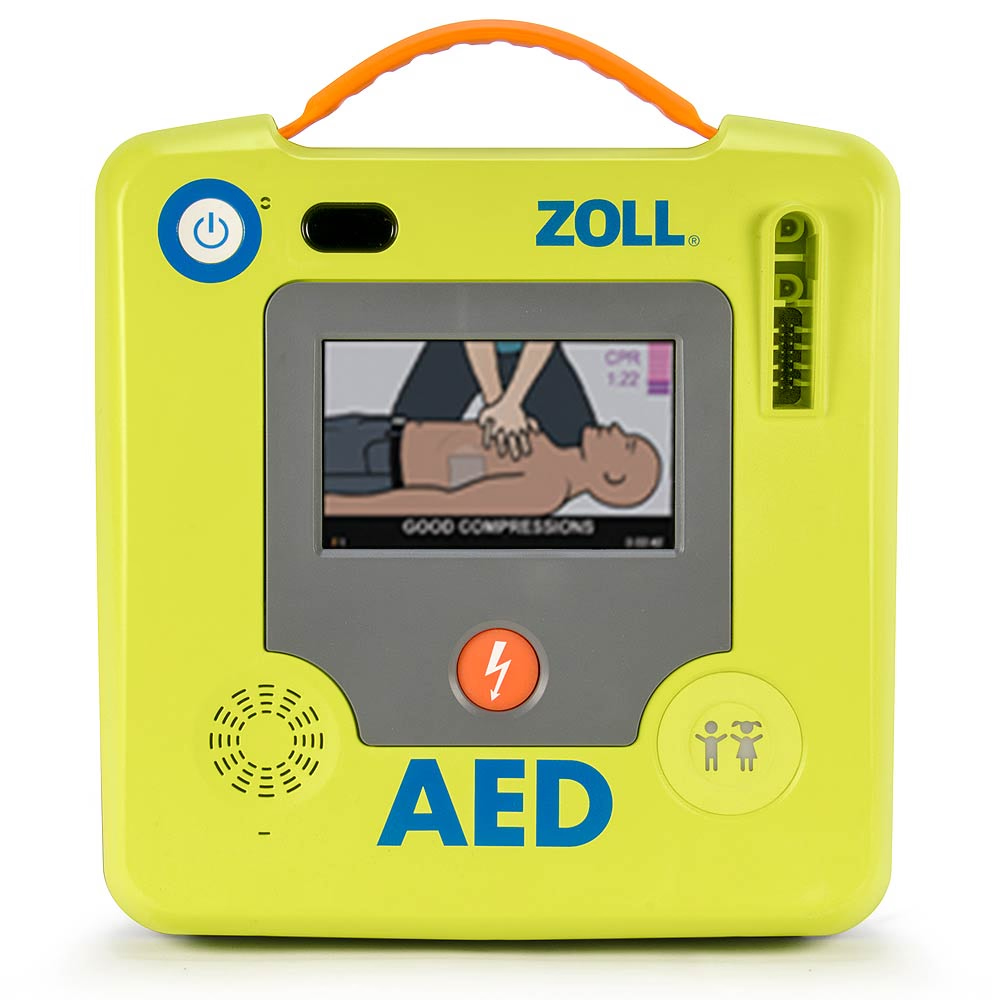
ZOLL AED 3
The ZOLL AED 3 defibrillator combines Real CPR Help technology with a full-color touchscreen, Wi-Fi...
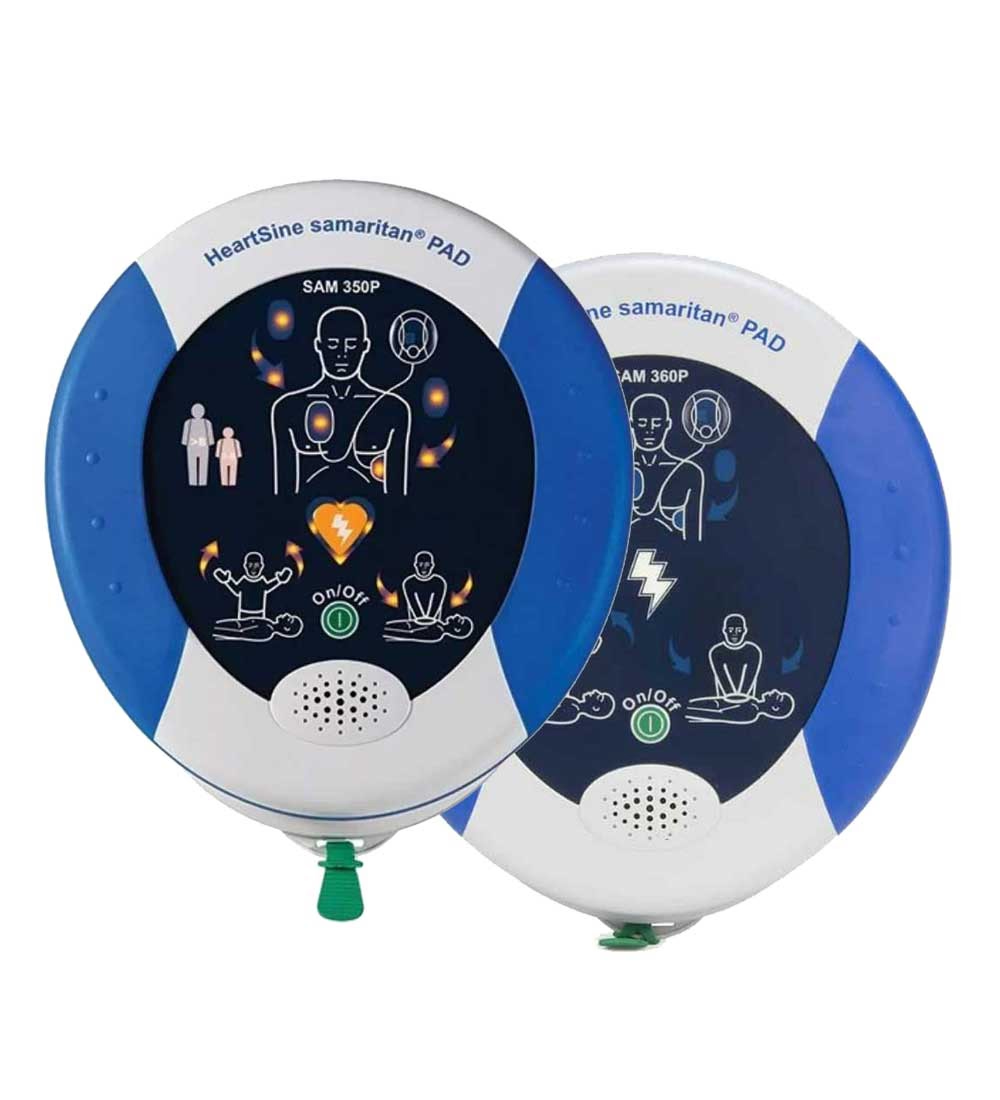
HeartSine Samaritan PAD 350P & 360P
The semi-automatic HeartSine samaritan PAD 350P AED and fully automatic HeartSine samaritan PAD 360P...
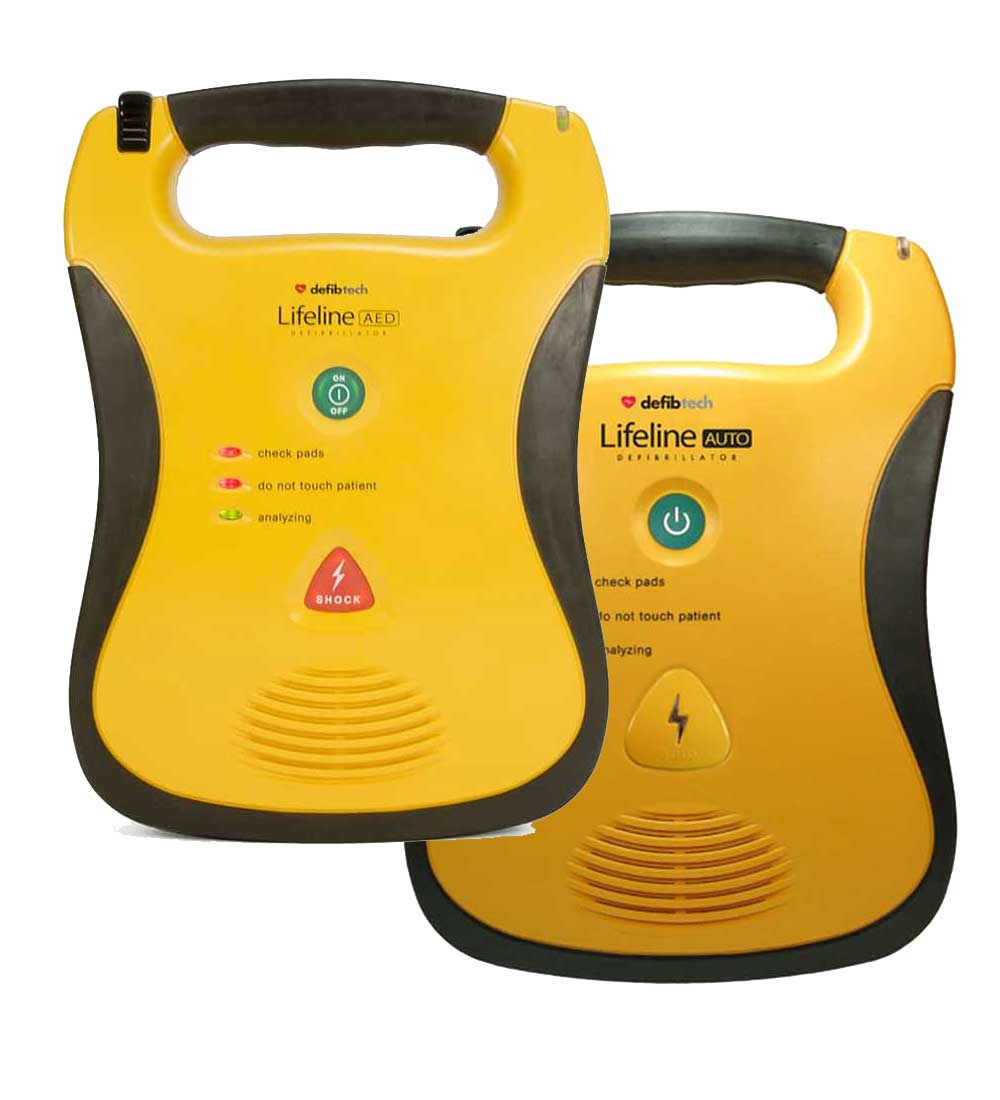
Defibtech Lifeline AED
The original Defibtech AED includes all mission critical features necessary to provide the most adva...
North Carolina AED FAQs
Is an AED required in North Carolina?
What are the penalties for not having an AED in North Carolina?
Do I need training to use an AED?
How often do AED pads and batteries need replacing?
Does North Carolina have Good Samaritan protection for AED users?
Where should I place an AED in my building?
Protect Your North Carolina Business Today
Every second counts during a cardiac emergency. Equip your facility with an FDA-approved AED, then register it with us to keep it rescue-ready.
Free AED program management for every AED you register. We track your pads and battery expiration dates automatically.